If you searched for a body fat percentage chart, you want visual context, not just numbers in a table. This guide explains what each range tends to look like, what training and nutrition context usually applies, and how to figure out where you are right now.
For a quick estimate based on your own photos, try a free AI body analysis.
How to use a visual body fat chart without treating it as a test
A body fat percentage chart for men and women is a set of illustrations, not a calibrated measuring instrument. Every reference image below is synthetic: no photographed participant was measured at the labelled percentage. The labels organize visual examples and must not be used to diagnose health or set a minimum body-fat target.
Compare the abdomen, upper arms, back, hips, and thighs together. A muscular person and a less muscular person can have the same body-fat percentage with different outlines. Clothing, posture, and light can also change apparent definition without changing tissue.
| What you want to know | Useful next step | | -------------------------------------- | -------------------------------------------------------------------------------------- | | Which reference looks broadly similar? | Compare several regions and adjacent ranges, not only visible abs | | What is my estimated range? | Use the photo calculator with consistent inputs | | Is my body composition changing? | Compare your own progress photos under the same conditions | | Is my body fat healthy for me? | Discuss your medical context with a qualified professional; a chart cannot answer this |
For the difference between visual estimates and measured references, read body-fat measurement methods.
Body fat percentage ranges for men
These visuals are synthetic broad references, not diagnostic examples. Lighting, muscle mass, genetics, frame size, age, and fat distribution can make two people at the same percentage look different.
Essential fat: 2-5%
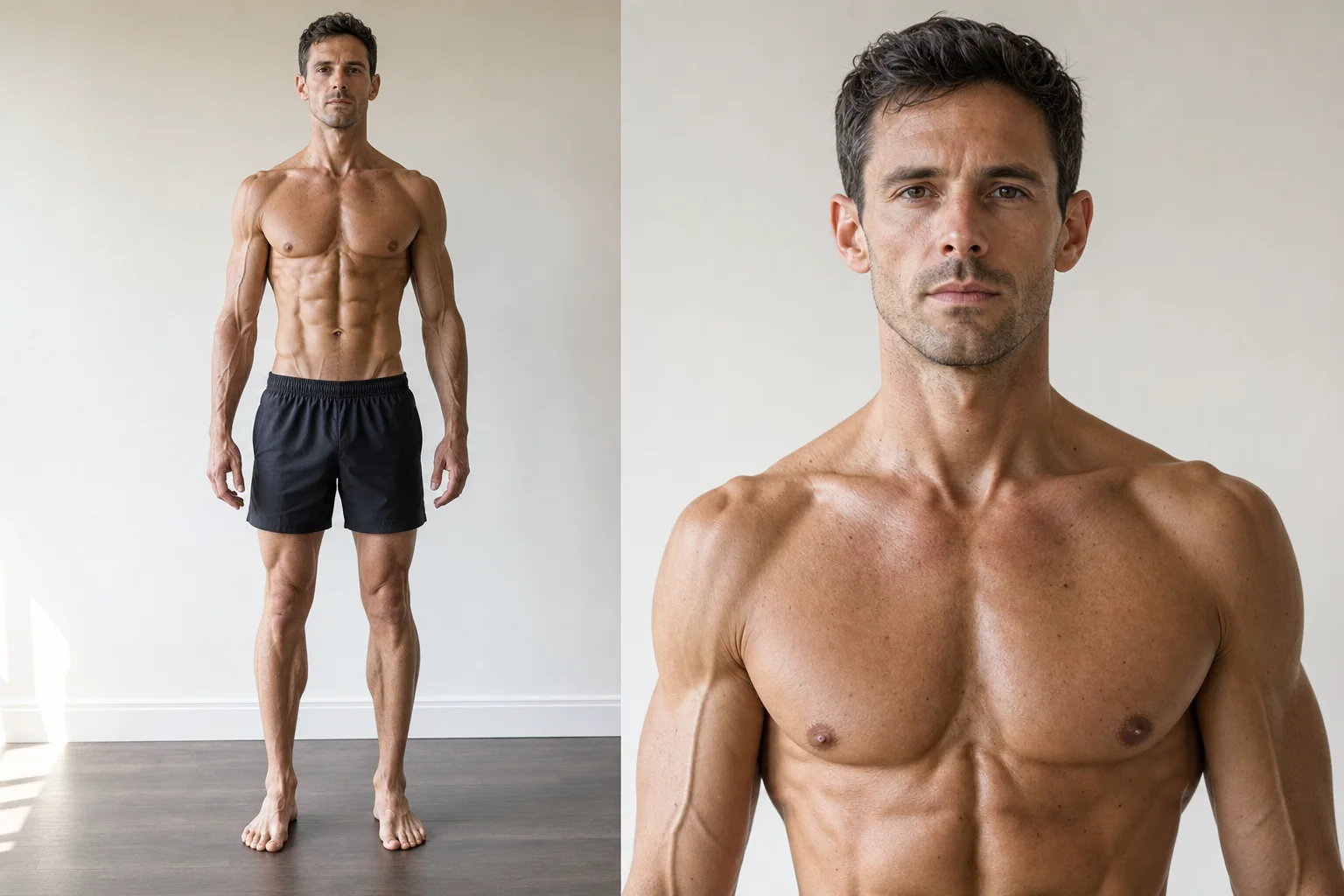
Competition-bodybuilder territory. Not sustainable for normal life. Hormonal function, energy, sleep, and recovery are often compromised at this level.
Athletic lean: 6-9%
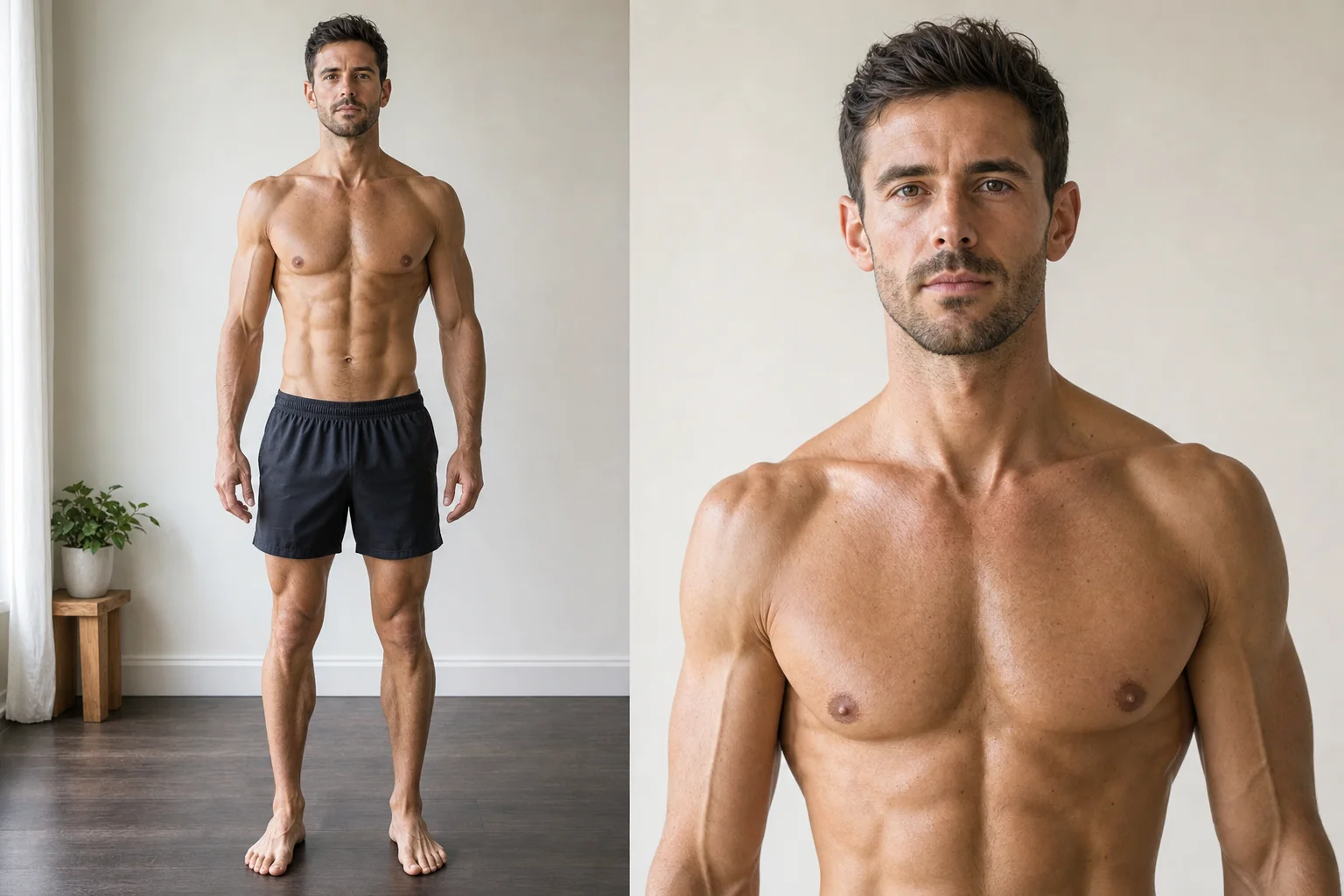
Visible abs with deep separation, strong vascularity, and a very lean face. This range is usually maintainable only for short periods and requires strict nutrition.
Fit lean: 10-14%
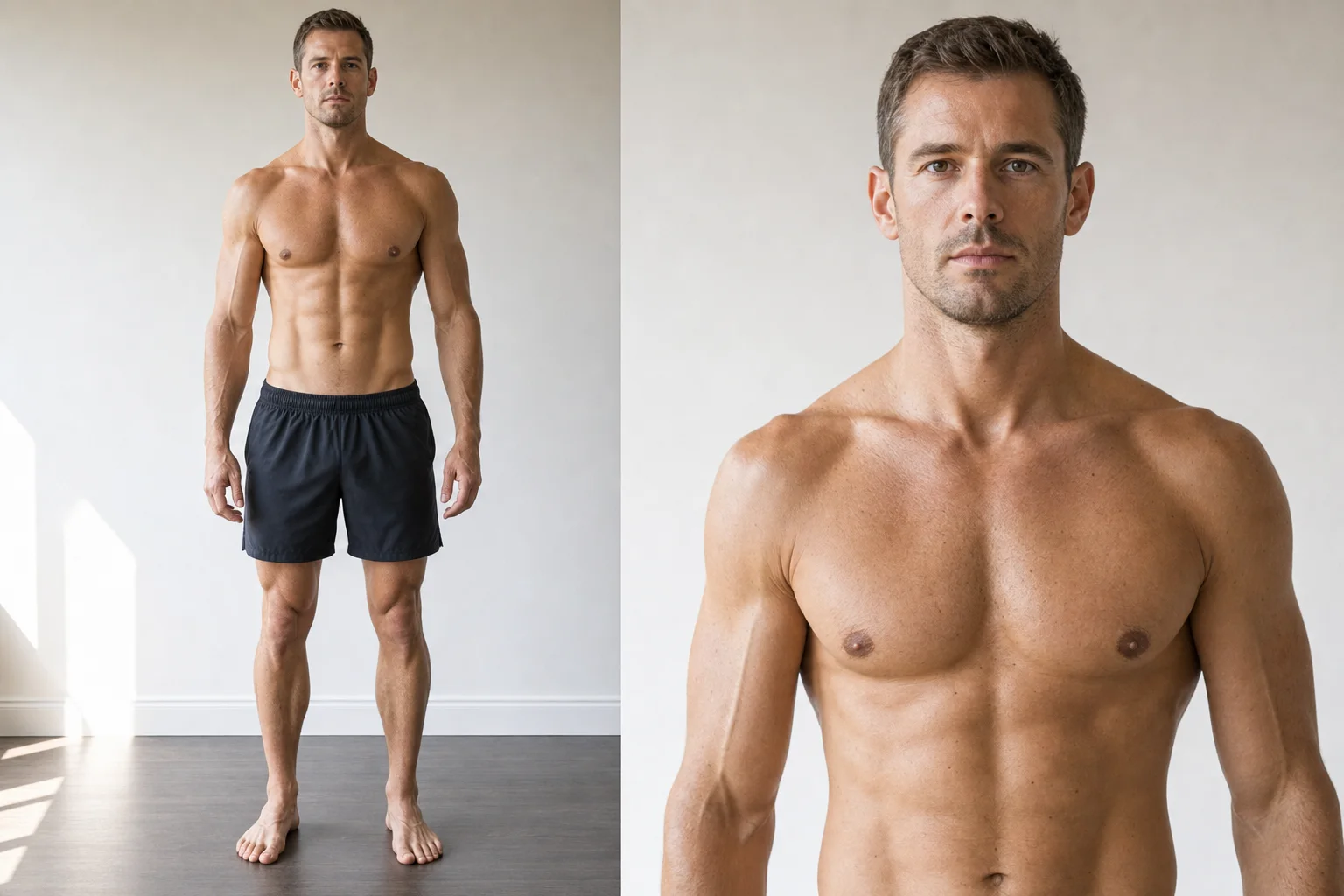
Clear ab outline, visible muscle separation through the upper body, and some vascularity. Most people who look ripped fall in this range. It can be sustainable for some with consistent training and moderate nutrition discipline.
Visual reference: 15-19%
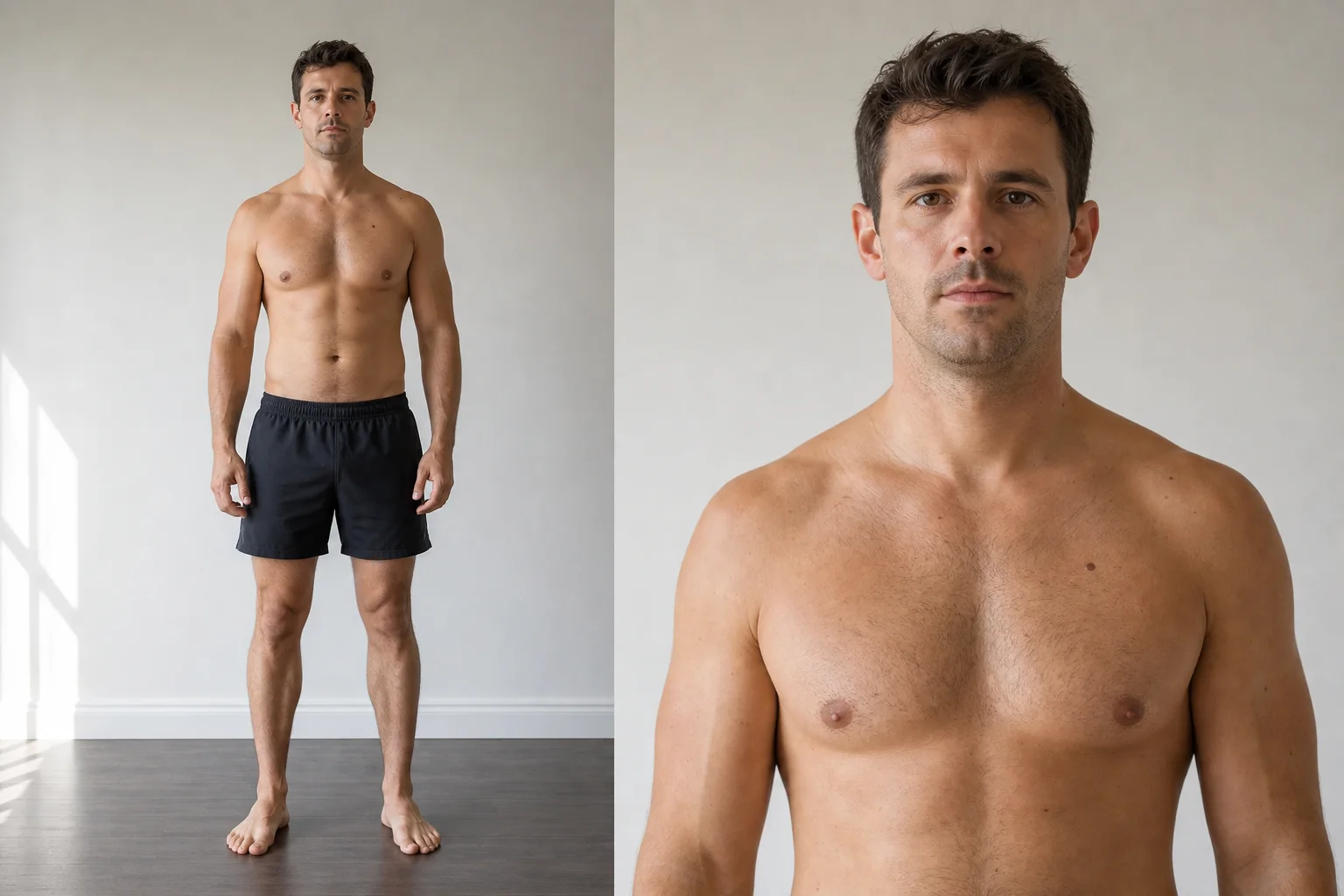
Some muscle definition is visible, especially chest, shoulders, arms, and upper back. The midsection looks flat or slightly soft. Many regularly training men land here.
Average: 20-24%
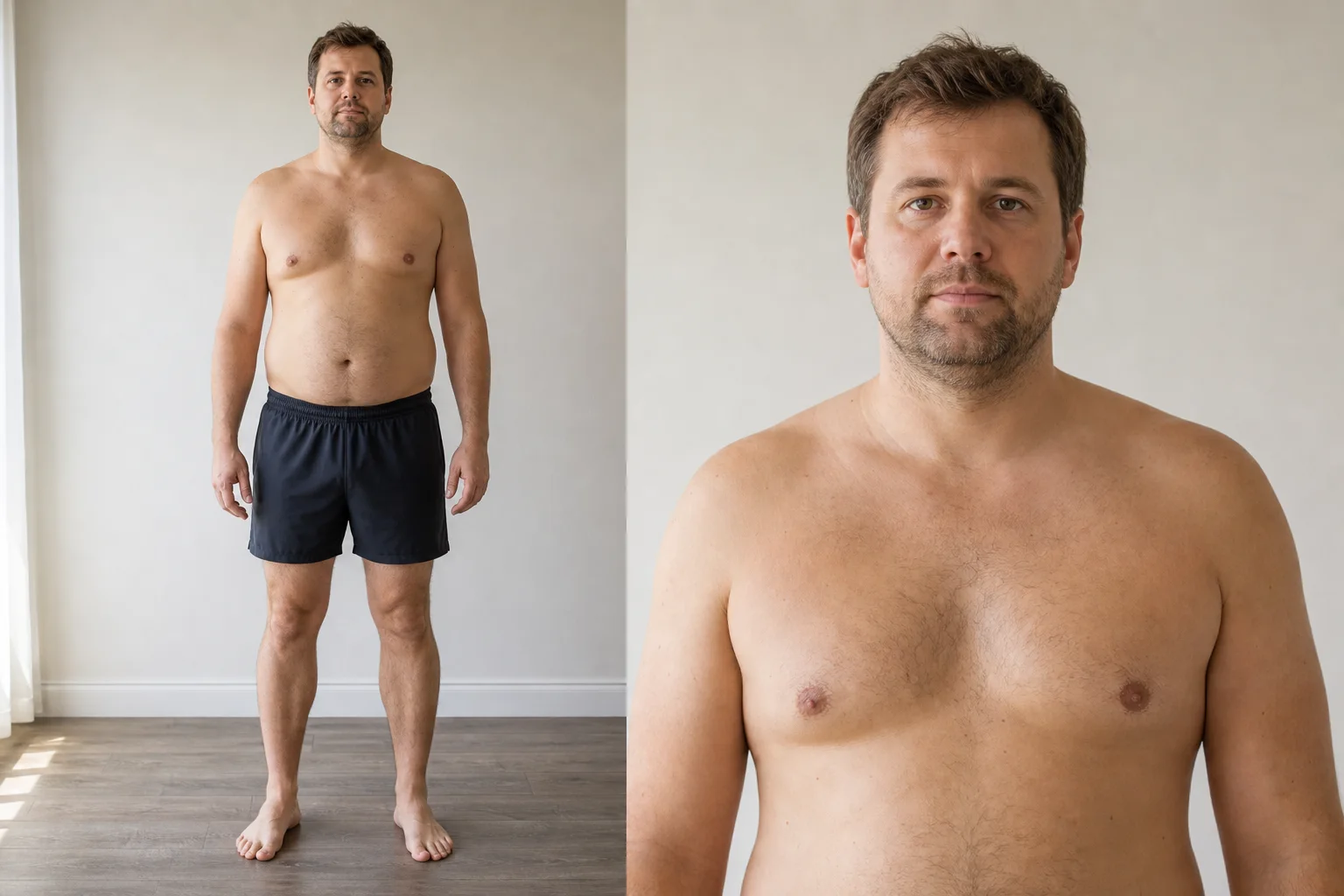
Softer overall appearance. Muscle shape may be visible but not defined. The midsection usually carries more softness.
Above average: 25-29%
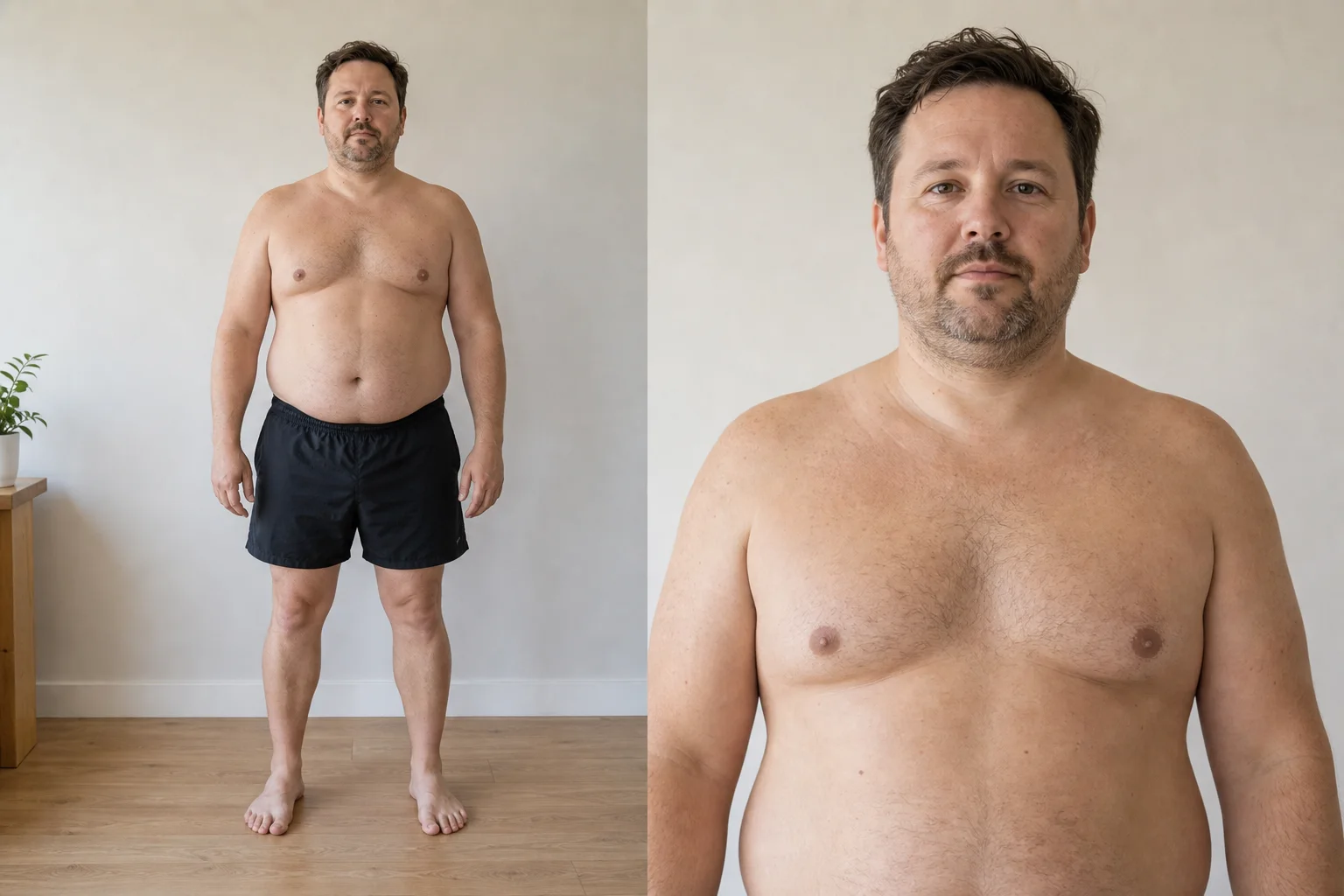
More noticeable midsection and lower-back softness. Less visible muscle definition. The face may appear rounder.
Visual reference: 30%+
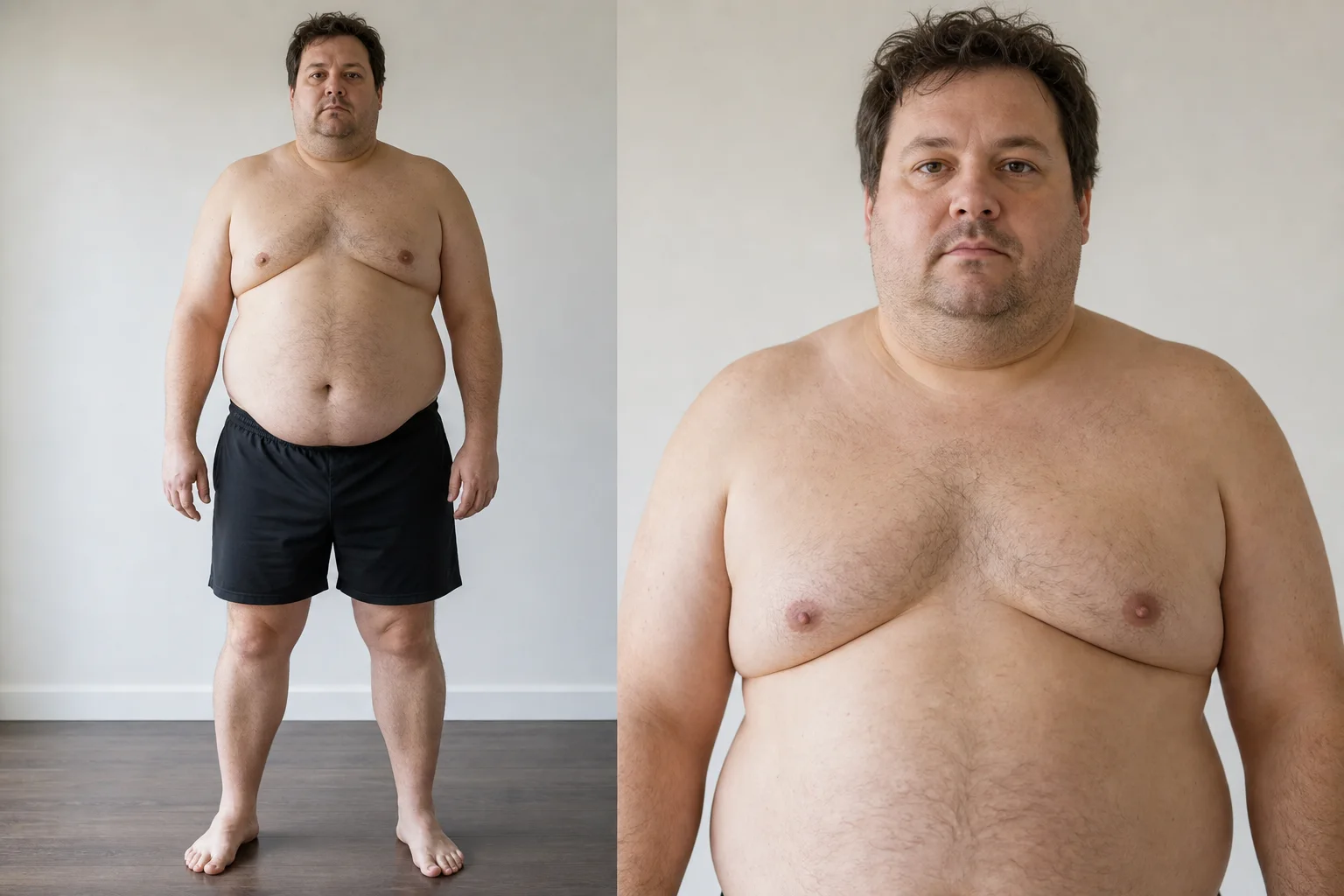
Significant fat accumulation, especially around the midsection. Muscle definition is mostly hidden. The illustration cannot determine an individual health risk.
Body fat percentage ranges for women
Essential fat: 10-13%
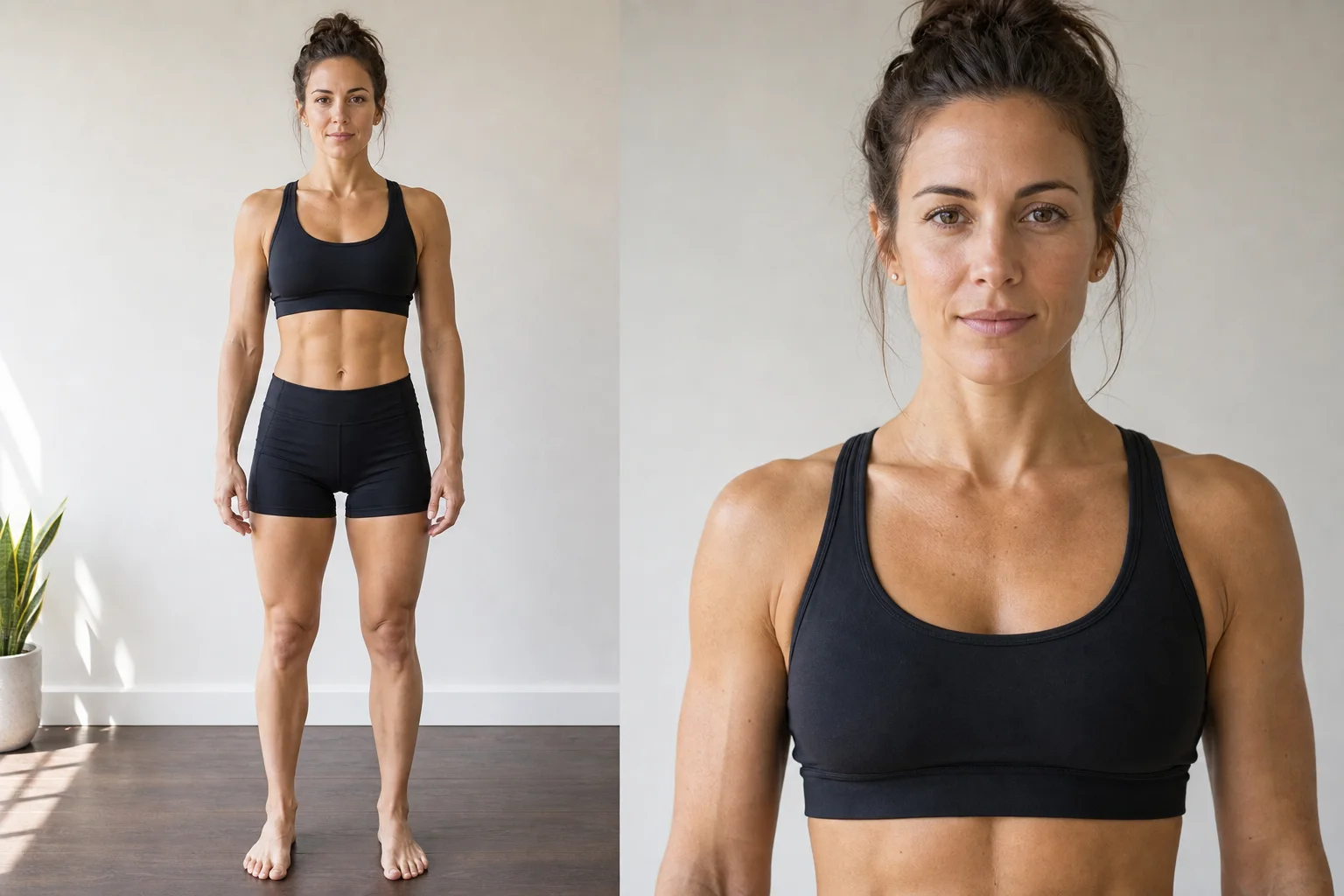
Competition-level leanness for many physique athletes. Menstrual function may be disrupted. This is not a normal maintenance target.
Athletic lean: 14-17%
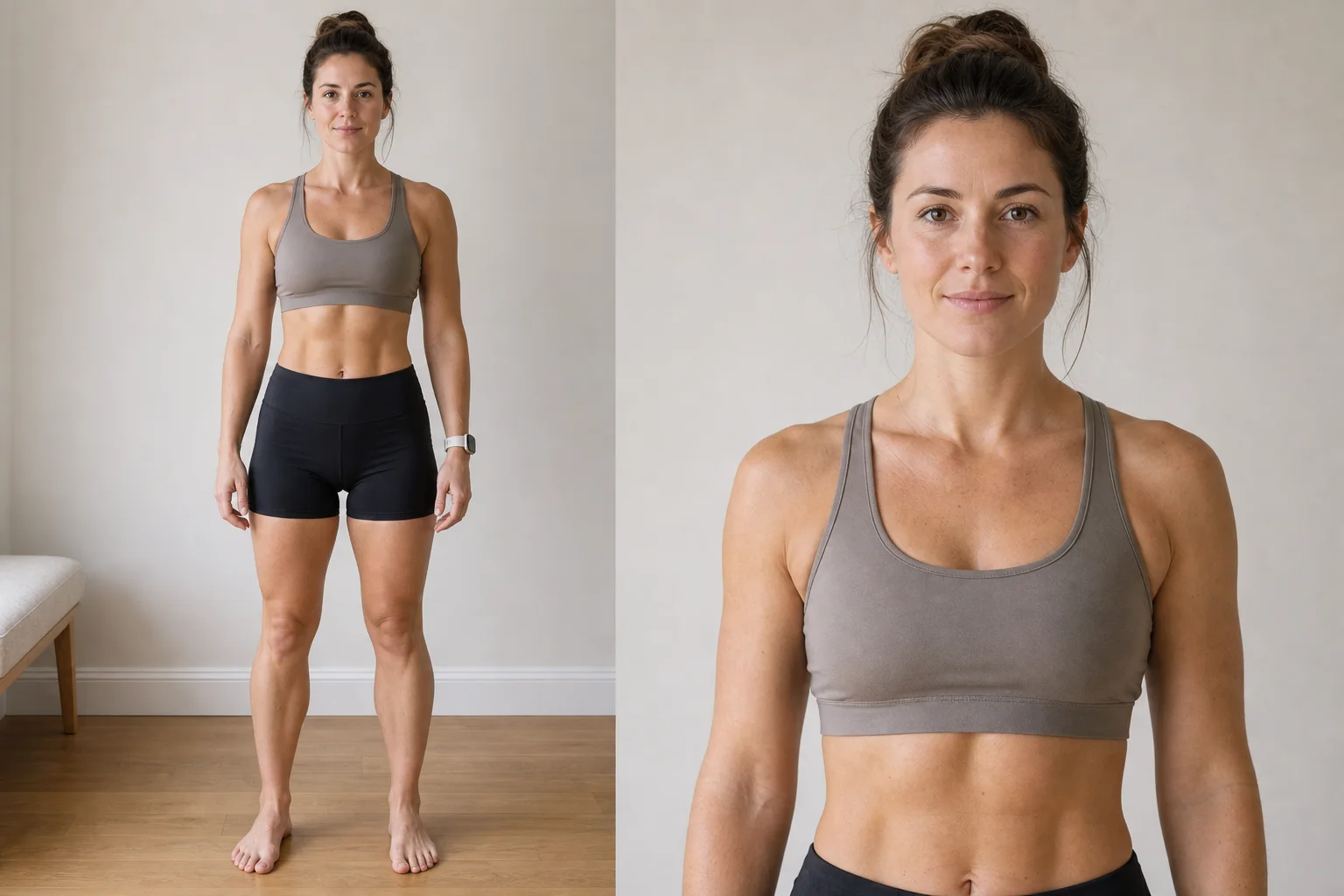
Visible muscle definition and minimal visible body fat on limbs. Some women in physique sports may compete around this range. It can be difficult to maintain.
Fit: 18-22%
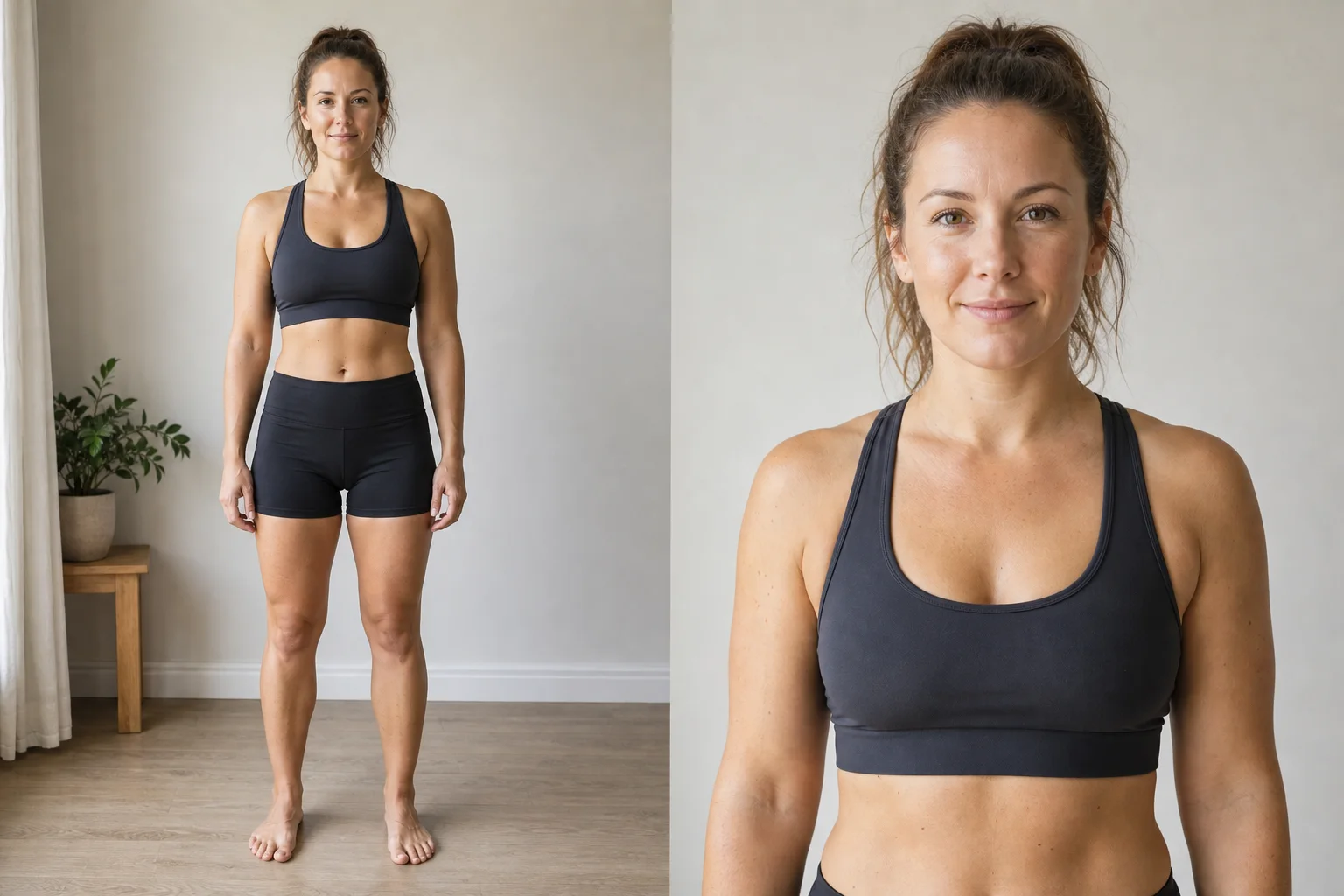
Toned appearance with visible muscle shape. Often sustainable for active women and a common goal range for people who train consistently.
Visual reference: 23-27%
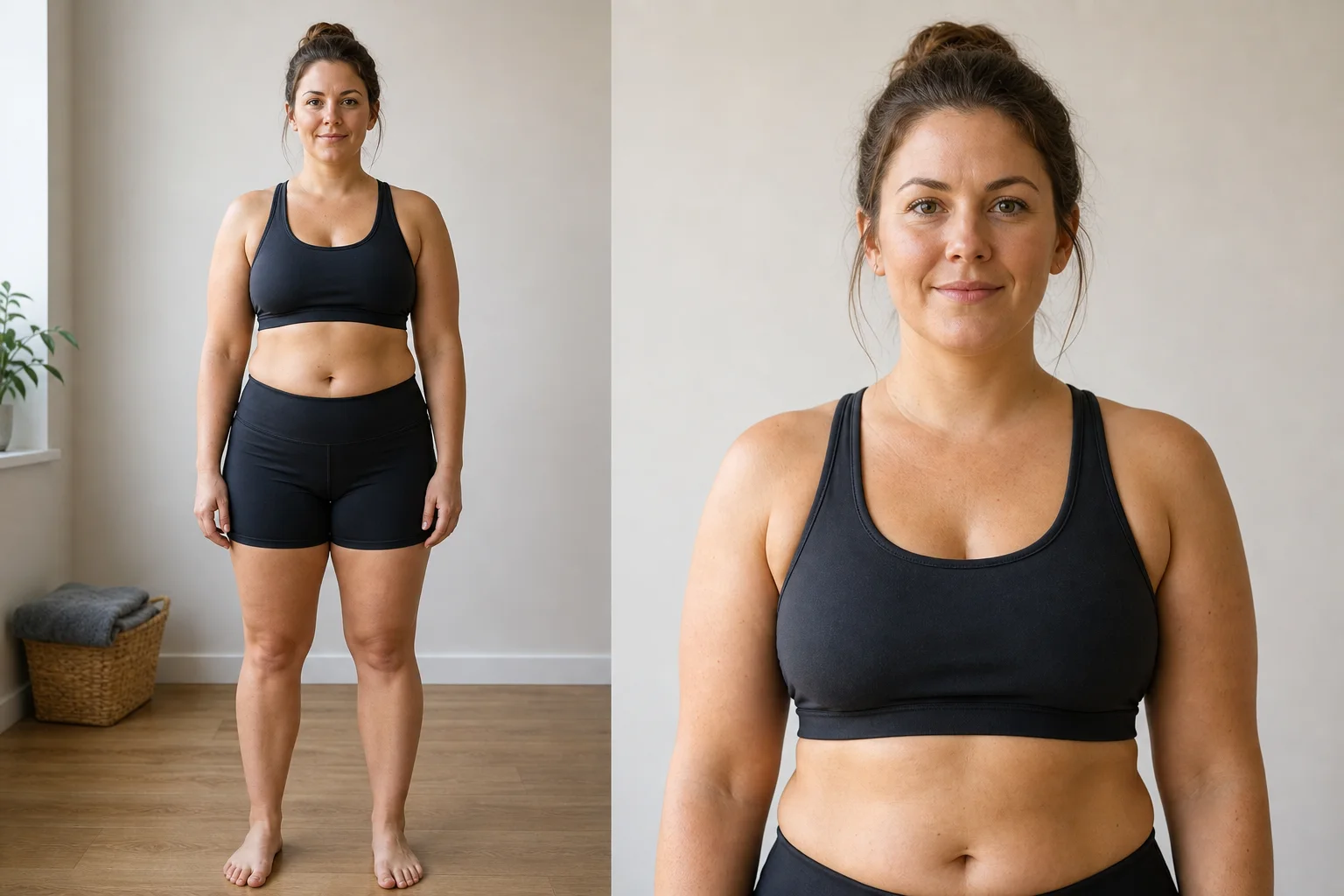
Softer muscle outlines in this synthetic example. Many consistently active women land here.
Average: 28-32%
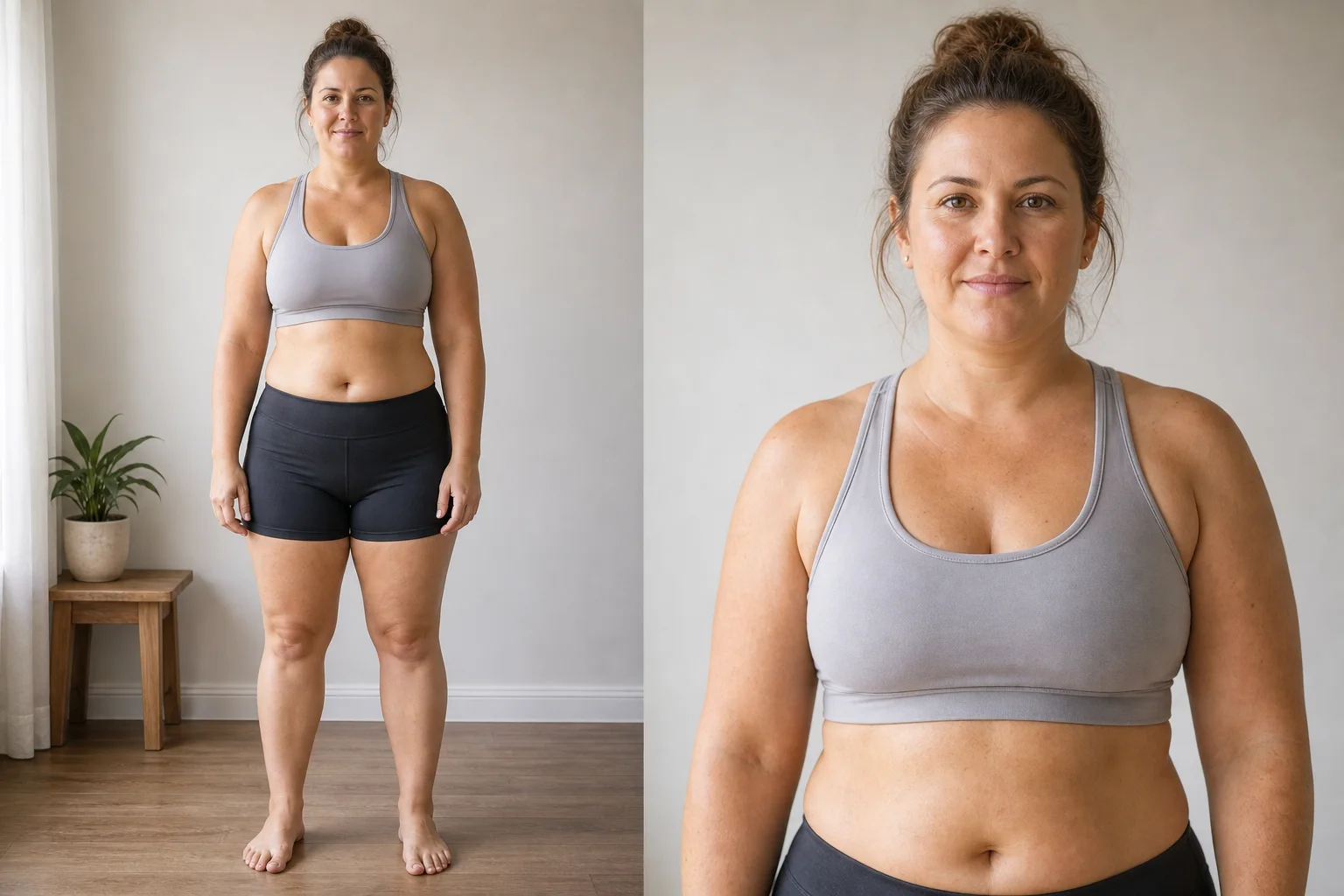
General softness and less visible muscle definition. Normal for many adult women.
Above average: 33%+
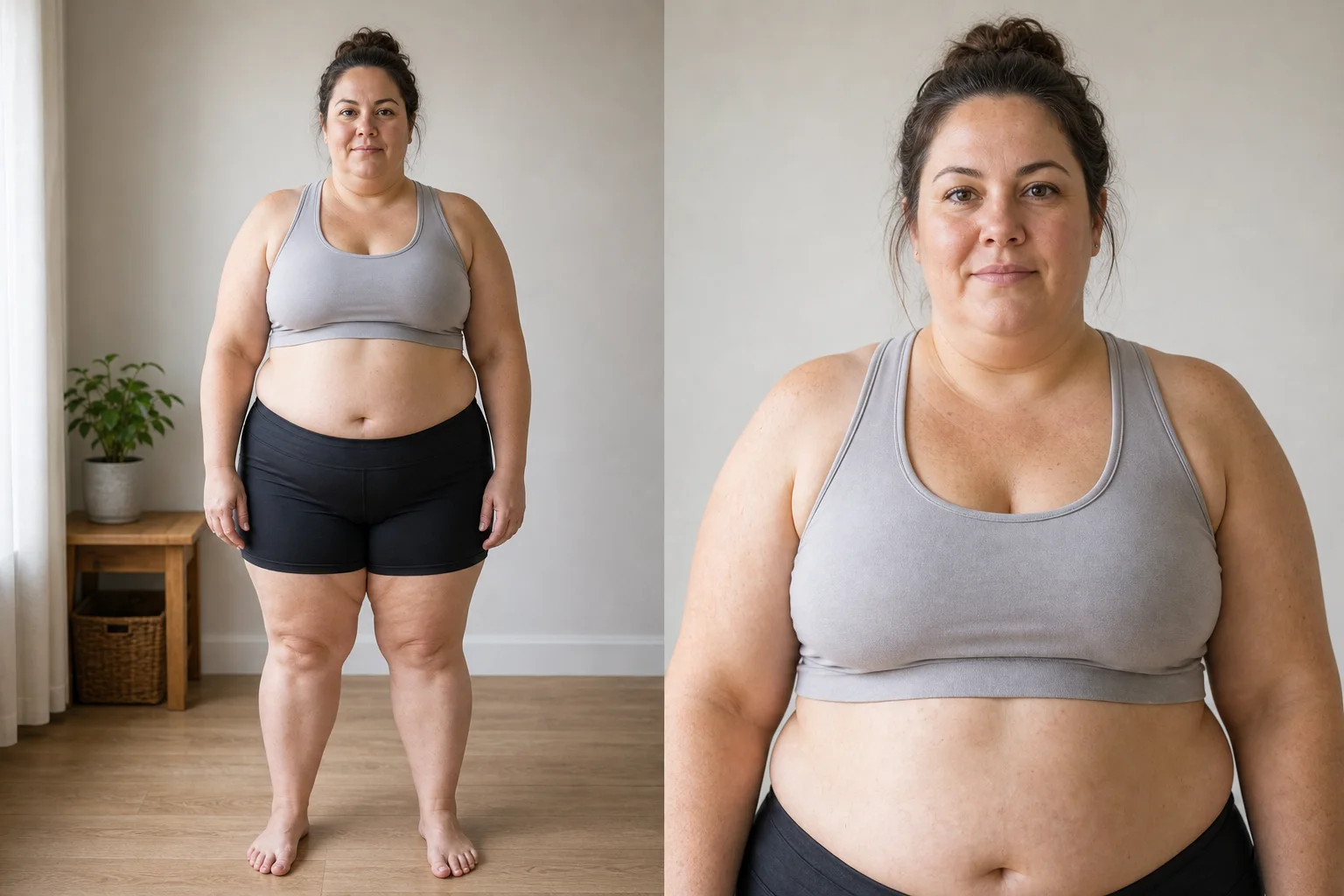
Noticeable fat accumulation and less visible muscle shape. Health cannot be classified from this illustration.
How to estimate your body fat percentage
The most practical way to place yourself on this chart is a repeatable photo check-in. You do not need calipers or a DEXA appointment for directional tracking.
- Take a consistent photo: same lighting, pose, distance, and clothing.
- Upload it to an AI body fat analyzer.
- Read the range, not a single number.
- Compare to this chart for visual context.
- Track direction over four or more weeks before drawing conclusions.
For the detailed setup protocol, read how to take body fat photos.
Why LeanLens shows a range instead of a number
Single numbers feel precise but are usually misleading from photo inputs. A range, such as 14-17%, is more honest and leads to better decisions. You react to trends instead of reacting to a digit that shifted because your lighting changed.
Get a confidence-aware body fat range
Use a clear photo to get a useful range and context you can compare over time.
FAQ
What body fat percentage is considered healthy?
A visual chart cannot establish a healthy body-fat percentage for an individual. Age, medical history, symptoms, and other health measures matter more than matching an illustrated range.
What body fat percentage do you see abs?
Many men start seeing ab definition below about 15%. Many women see stronger abdominal definition below about 20%. Genetics, muscle development, lighting, and fat distribution also matter.
Is a body fat percentage chart accurate?
Charts give general visual benchmarks. Individual variation in fat distribution, muscle mass, frame size, and photo conditions means two people at the same percentage can look different.
How can I check my body fat at home?
Home options include circumference measurements, calipers, BIA scales, and repeatable photo estimates. Upload consistent photos to a tool like LeanLens and track your range over time.