How AI body analysis works: what happens after you upload a photo
If you want the short version first, compare the product pages for AI Body Analysis App, How AI Body Analysis Works, and Free AI Body Analysis.
Most people do not actually want a mysterious “AI verdict.”
They want a clear answer to one question: what is this app really seeing when I upload a photo?
Step 1: the AI is reading visible patterns, not hidden biology
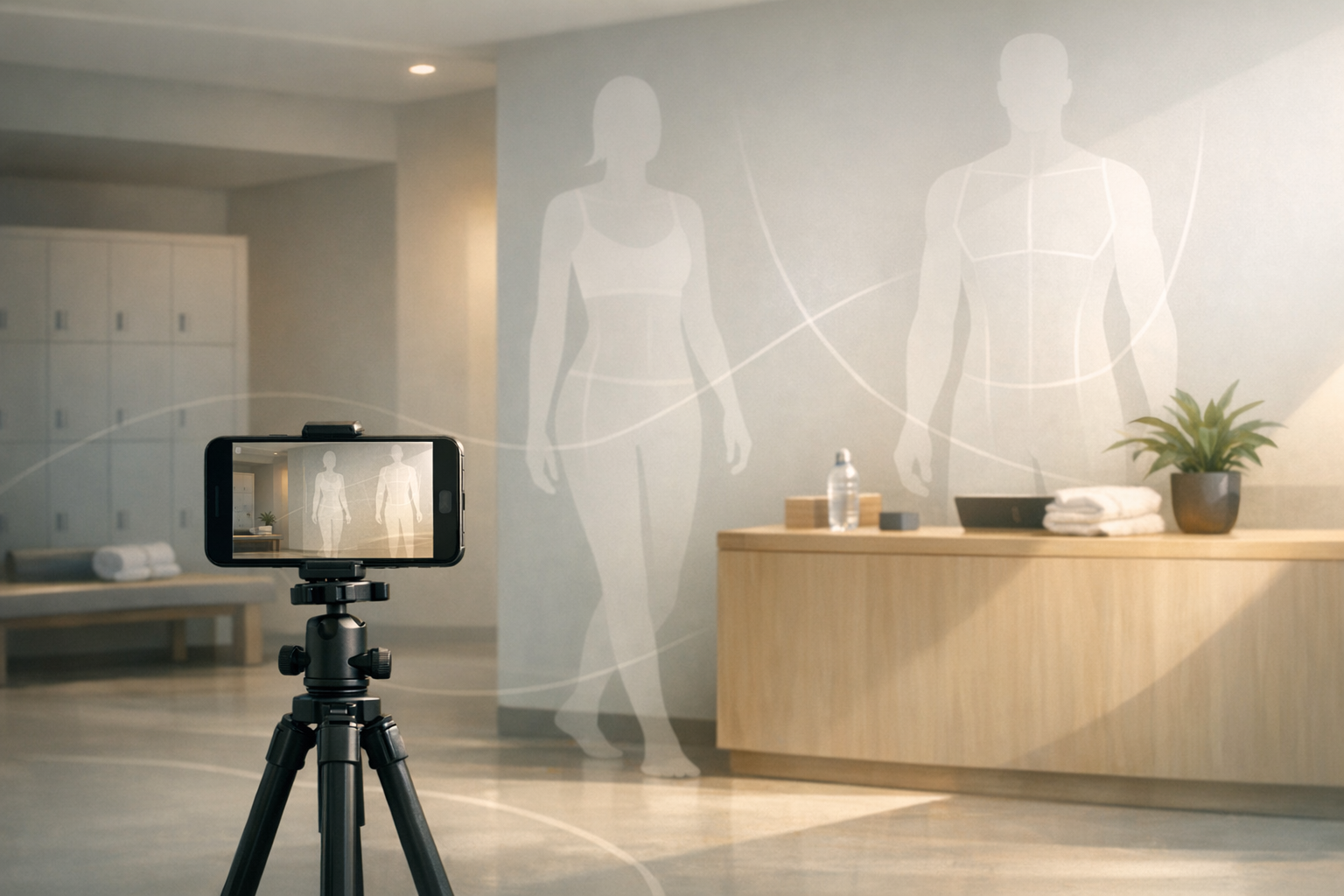
Photo-based AI body analysis starts with what is visible:
- body shape and proportions
- lighting and contrast
- visible softness or definition
- left-right and upper-lower balance
- consistency across one or more angles
That means the model is reading appearance cues, not secretly measuring your body with lab equipment.
Step 2: why the honest output is a range, not a magic number
If a photo-based tool gives you a number like 13.2% with zero uncertainty, be skeptical.
A better system gives you:
- a range
- confidence context
- a useful next step
That is the LeanLens approach. The point is not to pretend the result is perfect. The point is to make it actionable.
A repeatable estimate with clear confidence is far more useful than fake precision that changes your mood but not your decisions.
Step 3: what AI body analysis can infer well
Used correctly, AI from photos can help with:
- directional body-composition signal
- visible physique balance and symmetry
- progress tracking over multiple check-ins
- deciding whether a weird result looks real or noisy
That is why LeanLens works best as a decision aid rather than a one-time score generator.
Step 4: what it cannot infer well
Photo-based analysis is weaker when it is asked to do too much.
It cannot reliably:
- diagnose health conditions
- replace clinical body-composition methods
- explain every short-term visual shift
- overcome inconsistent lighting, angle, pose, or recovery state
That is not a flaw unique to LeanLens. It is just the limit of what a photo can tell you.
Step 5: how to get more reliable check-ins
If you want the AI to be more useful, improve the inputs:
- Use the same lighting.
- Keep camera height and distance consistent.
- Re-check on the same cadence each week.
- Use extra angles when one photo feels noisy.
The better your check-in conditions, the more useful the trend becomes.
Step 6: where privacy and professional methods fit in
You should always know:
- what happens to your photos
- whether you can use the tool without an account
- when a professional method is the better choice
LeanLens is built for informational fitness guidance, not medical diagnosis. If you need medical-grade accuracy, use clinical tools and qualified professionals.
Run one clean check-in and see how LeanLens turns a photo into a more useful decision.
Photos not stored by LeanLens after processing.
Start My Check-In