What the AI is looking at when it reads shape, balance, body fat appearance, and physique context from photos
What the AI is looking at when it reads shape, balance, body fat appearance, and physique context from photos
From Photo Upload to Practical Results
A step-by-step guide to what the AI reads, what it cannot measure, and how to make photos more reliable.
Free scanPrivate by designResults in seconds.
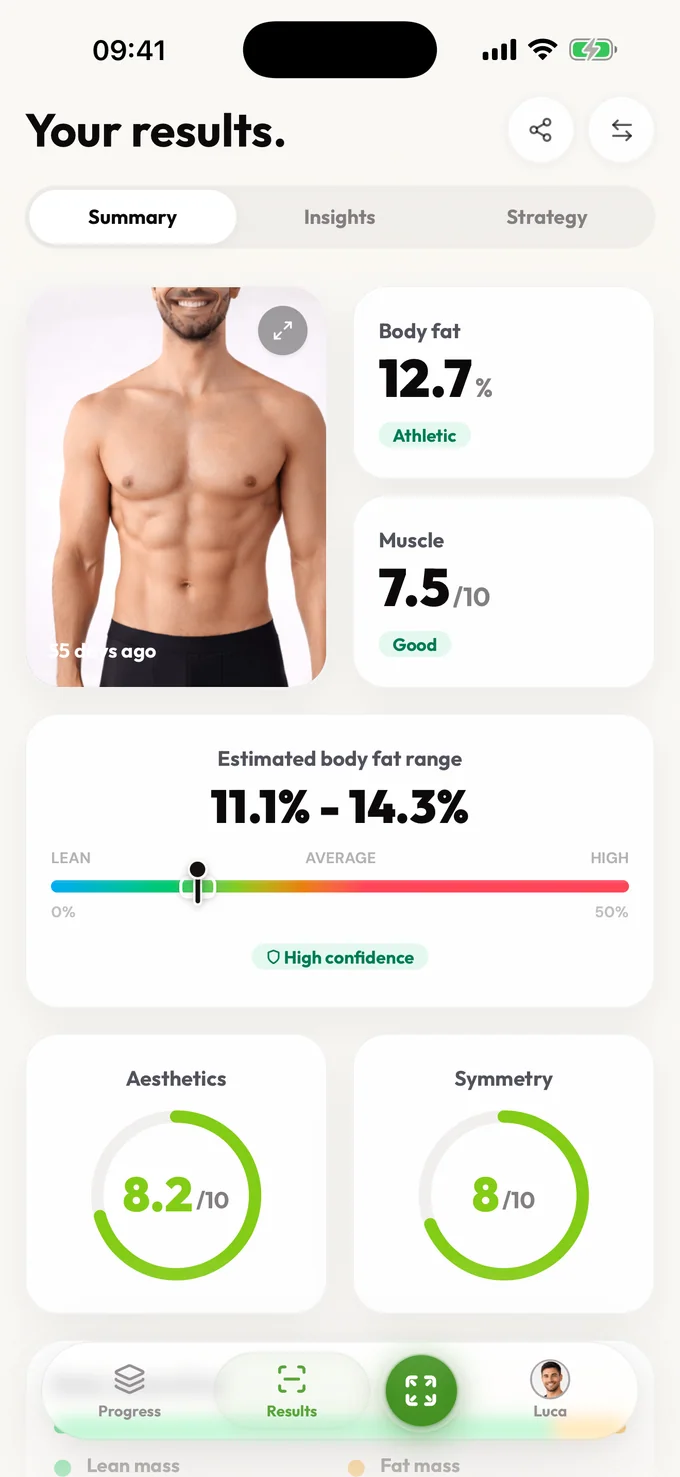
What the AI reads, where it stops, and how to improve the input.
Coming soon to Android
Android is next. Join the waitlist and we'll email you the moment it's ready on Google Play.
A step-by-step guide to what the AI reads, what it cannot measure, and how to make photos more reliable.
Try the web scanA step-by-step guide to what the AI reads, what it cannot measure, and how to make photos more reliable.
What the AI is looking at when it reads shape, balance, body fat appearance, and physique context from photos
Why LeanLens returns confidence-aware guidance instead of pretending to know exact clinical values
What photo-based body analysis can infer well versus where it becomes too noisy to trust strongly
How better lighting, angles, and repeatable setup improve the quality of your next result
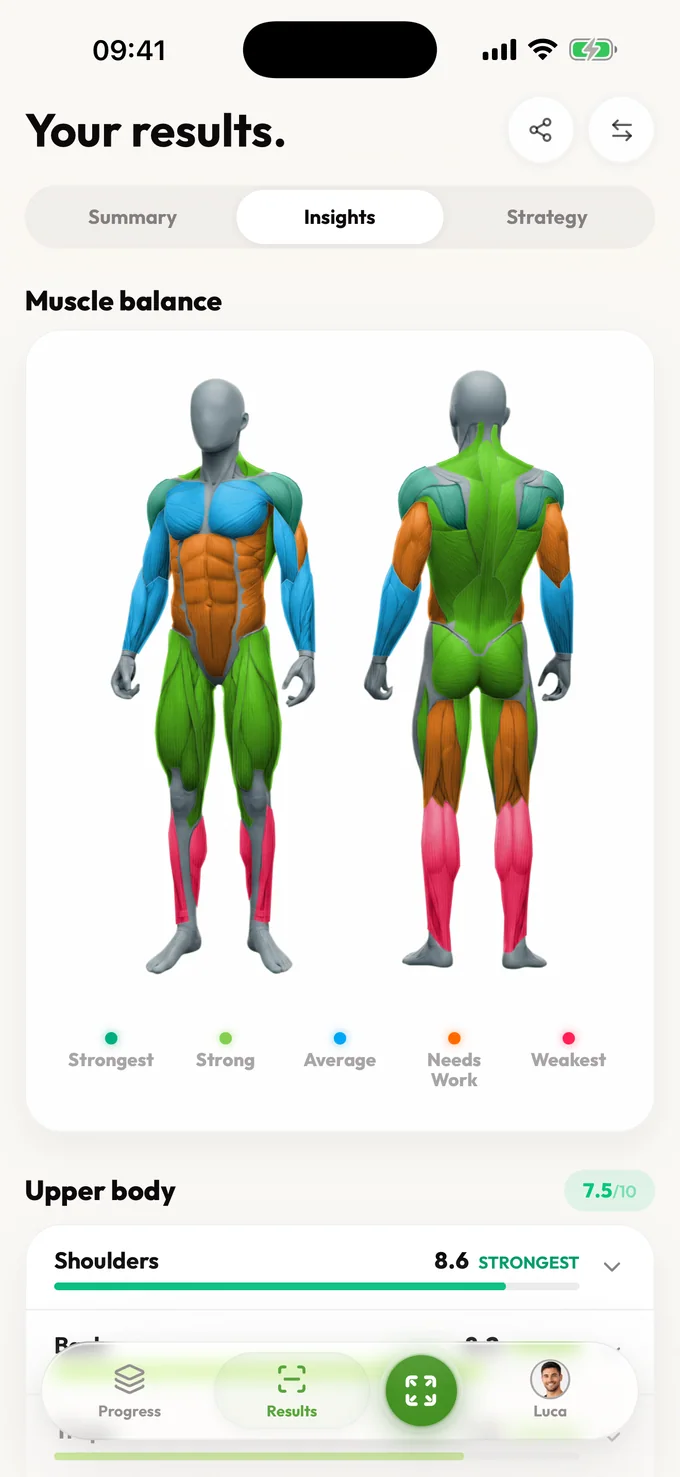
Most people do not need a mysterious black-box explanation. They need a clear answer to what the app is actually doing with their photos. LeanLens uses AI body analysis from photo check-ins to identify visible patterns, compare them against a structured interpretation system, and return guidance with confidence context. That means the output is designed to be useful without pretending the model can know everything. It can help with visual body-composition signal, physique balance, and progress direction. It cannot replace clinical testing or erase bad photo setup. Read each estimated result alongside its photo-quality limits before deciding whether the visible change supports a training adjustment. The photo analysis method reads external appearance: it cannot see bone density, internal organs or visceral fat, and a confidence label is not a clinical validation study.
A step-by-step guide to what the AI reads, what it cannot measure, and how to make photos more reliable.
What the AI is looking at when it reads shape, balance, body fat appearance, and physique context from photos
Why LeanLens returns confidence-aware guidance instead of pretending to know exact clinical values
What photo-based body analysis can infer well versus where it becomes too noisy to trust strongly
How better lighting, angles, and repeatable setup improve the quality of your next result
Compare
The workflow is useful when every step keeps uncertainty visible instead of hiding it behind a fake exact score.
| Step | What LeanLens reads | What it does not claim |
|---|---|---|
| Profile context | Height, scale weight and goals when entered by the user. | Body weight or medical history inferred from appearance. |
| Evidence limits | Confidence and image-quality limitations for the submitted photos. | A clinically validated error rate inferred from studies of other products. |
| Method provenance | The report separates entered profile values from visual estimates and suggested actions. | An entered weight, a photo estimate and a clinical measurement are interchangeable evidence. |
| Validation status | Use confidence as a description of the available photo evidence. | A published LeanLens clinical accuracy statistic or a competitor study applied to this model. |
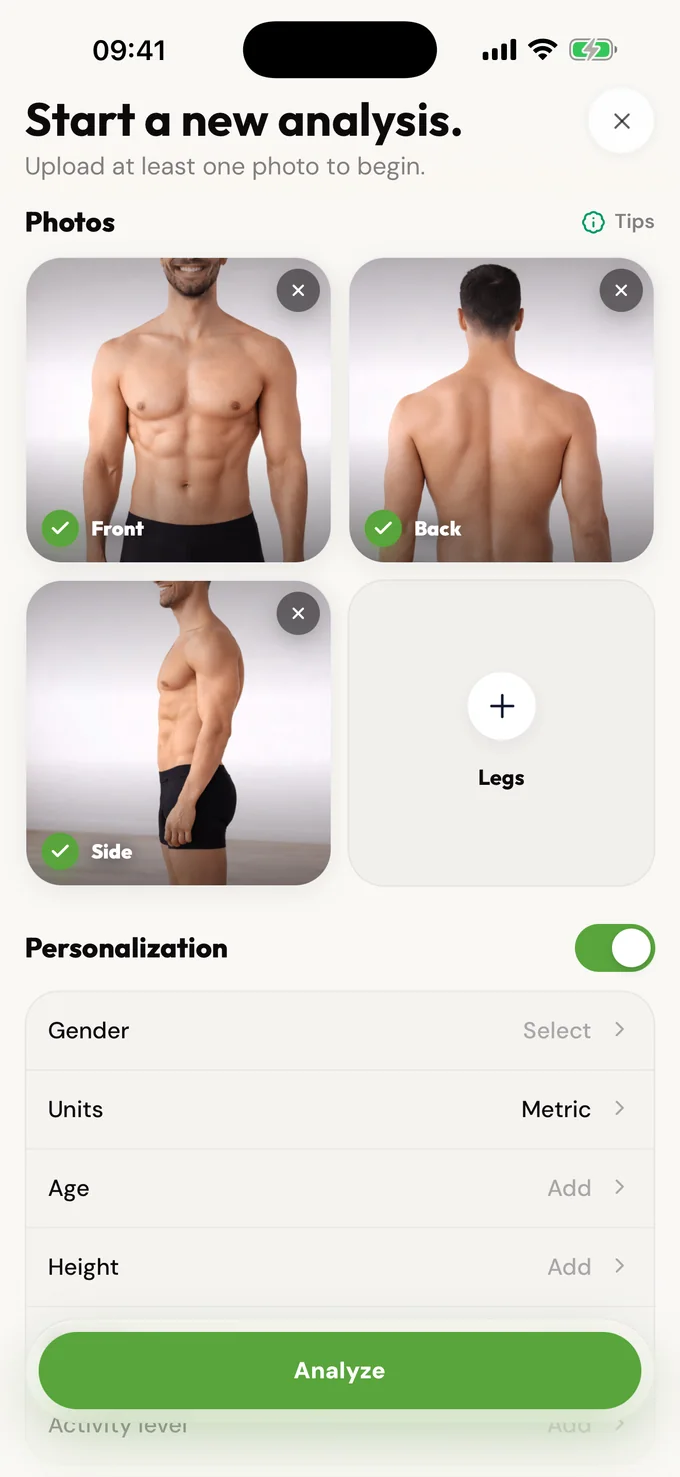
| Upload | Photo angle, framing, lighting, and optional profile context. | A medical intake, diagnosis, or permanent photo archive. |
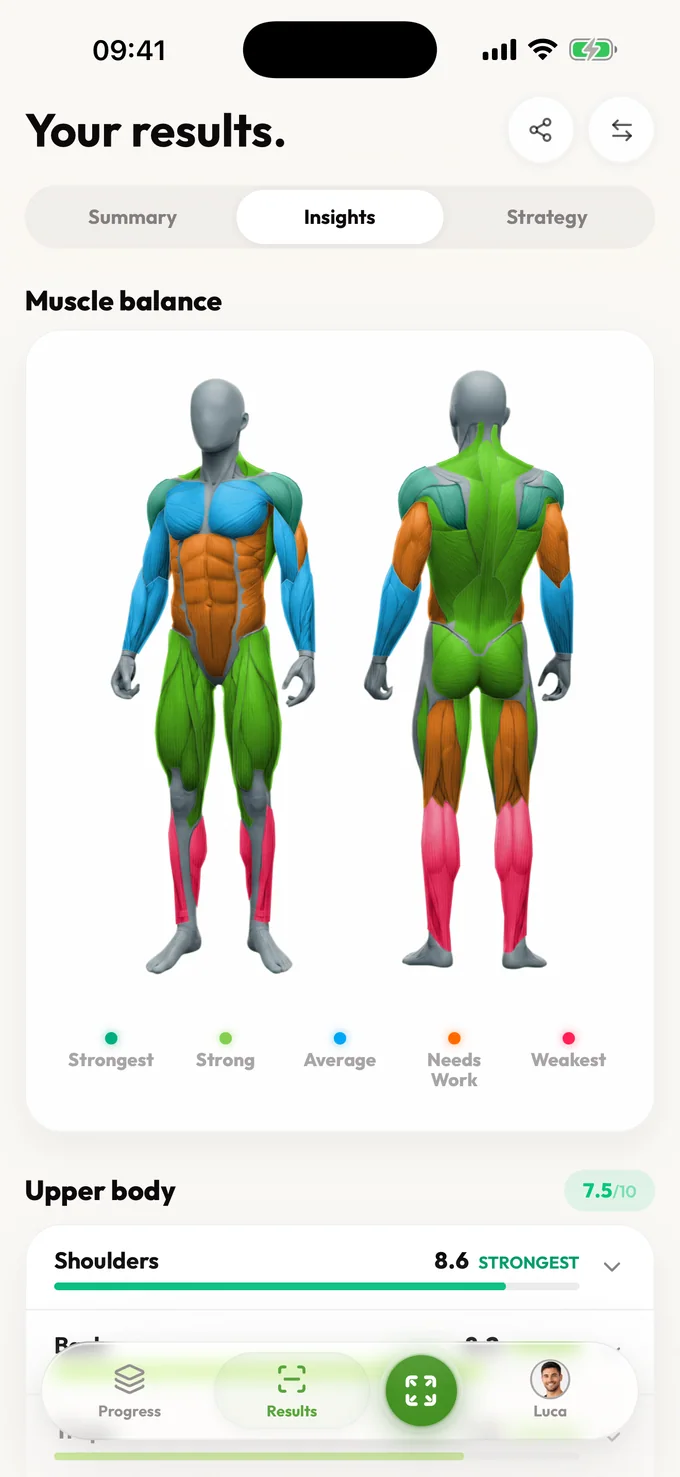
| Visual analysis | Visible body fat cues, muscle balance, symmetry, and proportions. | DEXA-level body composition or exact tissue measurement. |
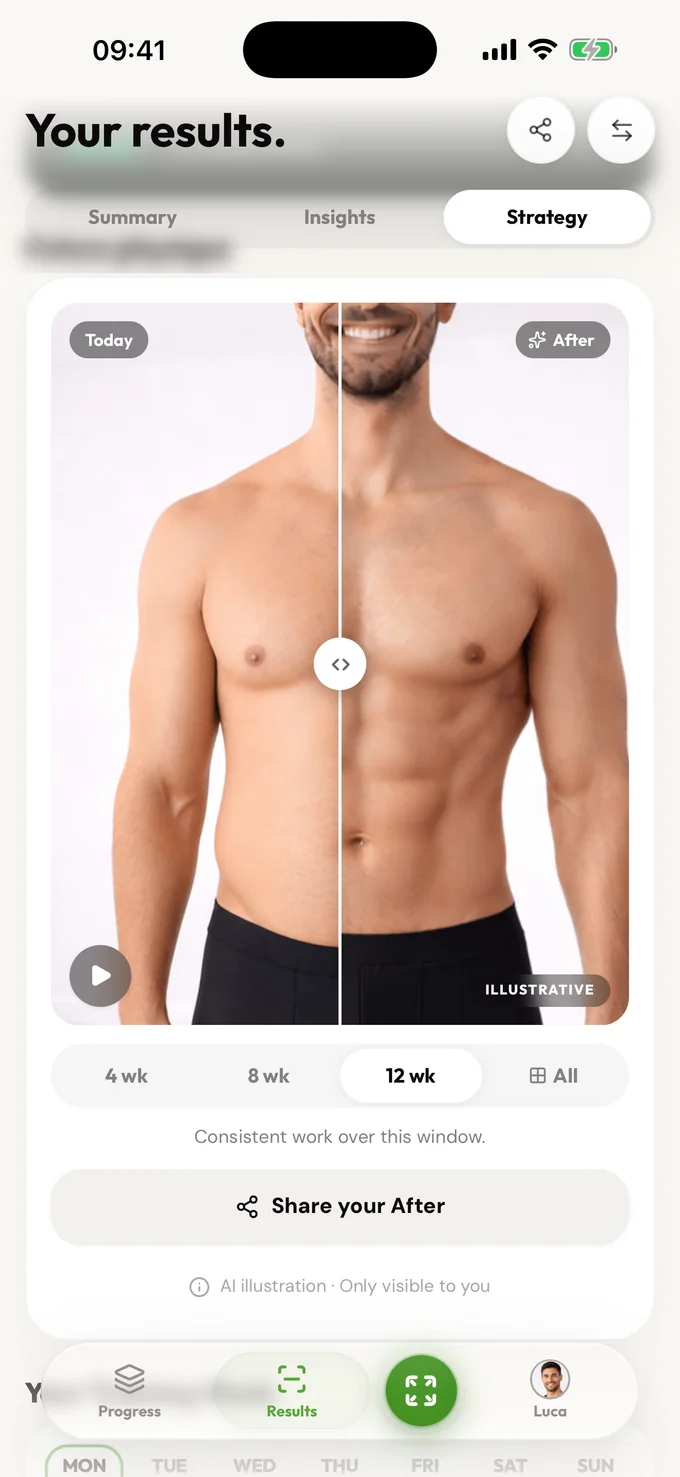
| Result | A confidence-aware range, focus areas, and next-step guidance. | A verdict on your body or a reason to overhaul your plan overnight. |
Privacy and honesty aren't features we bolted on; they shape how the product works.
One purpose: creating your results. Your photos are shared only with the providers needed to create or store them. Guest scans auto-delete; sign in and you can delete your saved photos and results anytime.
Ranges over false precision. No body-shaming mechanics, ever. Results describe, they don't judge. And nothing about your body is used to pressure you.
Free includes an estimated body-fat range, confidence, summary, visible scores, photo-quality guidance, core detail for every available Muscle Balance result, and a limited focus view. Pro unlocks muscle history, bilateral and training-plan detail, deeper trends, strategy, and comparisons.
Free accounts can scan again after a short wait. Pro removes the wait and unlocks full results, trends, and comparisons.
Not automatically. A study validates its tested method, sample and reference protocol; it does not establish an error rate for a different app. LeanLens confidence describes the available photo evidence, not a published clinical accuracy guarantee. Lighting, pose, clothing and body representation remain limitations even when a result looks precise.
It looks for visible physique signals such as body fat appearance, muscle definition, proportions, symmetry, and balance. These signals are useful for fitness check-ins, not diagnosis.
No. A photo can support a directional body fat range, but it cannot provide clinical precision. Lighting, pose, camera distance, clothing, and recovery state can all change the result.
Ranges are more honest for photo-based inputs. They help users track direction without overreacting to a fake-precise single number.
Front, side, and back photos give more context for fat distribution, muscle balance, and symmetry than one angle alone.
It cannot know exact tissue composition, diagnose health conditions, or replace methods such as DEXA, BodPod, or professional assessment.
Use similar lighting, camera height, distance, clothing, timing, and relaxed pose each time. Repeatability matters more than making one photo look perfect.
Coming soon to Android
Android is next. Join the waitlist and we'll email you the moment it's ready on Google Play.
A step-by-step guide to what the AI reads, what it cannot measure, and how to make photos more reliable.
Scan free every week. Upgrade to Pro for full reports and no waiting.