
Put your measurements in context
Explore height, weight and entered measurements in an illustrative 3D body model.
The latest CDC reference report gives an average male waist of 103.0 cm, or 40.6 inches, for US adults age 20 and older. The estimate comes from 2,605 examined men in NHANES August 2021–August 2023; the report was published in June 2025.
That number answers a population question. It does not tell you which waist you should aim for, how much body fat you have or whether your current training is working. Those are different questions, and the tape method matters before you make any comparison.
Measured male waist circumference: US NHANES 2021–2023, table 12
| Age | Mean waist (cm) | Mean waist (inches) |
|---|---|---|
| 20 and older | 103.0 | 40.6 |
| 20–29 | 95.1 | 37.4 |
| 30–39 | 101.3 | 39.9 |
| 40–49 | 104.7 | 41.2 |
| 50–59 | 106.4 | 41.9 |
| 60–69 | 105.4 | 41.5 |
| 70–79 | 107.5 | 42.3 |
| 80 and older | 104.1 | 41.0 |
What the average does—and does not—mean
These are survey-weighted means for the US population, not averages of gym members or measurements from other countries. Inches are calculated from the published centimeters using 1 inch = 2.54 cm and rounded to one decimal place.
The male median was 100.9 cm (39.7 inches), compared with the mean of 103.0 cm. The median is the midpoint of the measured distribution; the mean adds all weighted measurements and divides by their weighted count. Neither number is a health cutoff.
Age groups describe different people measured during the same survey period. The table is not a prediction that your waist must increase by a particular amount as you age.
How to measure at the same location as NHANES
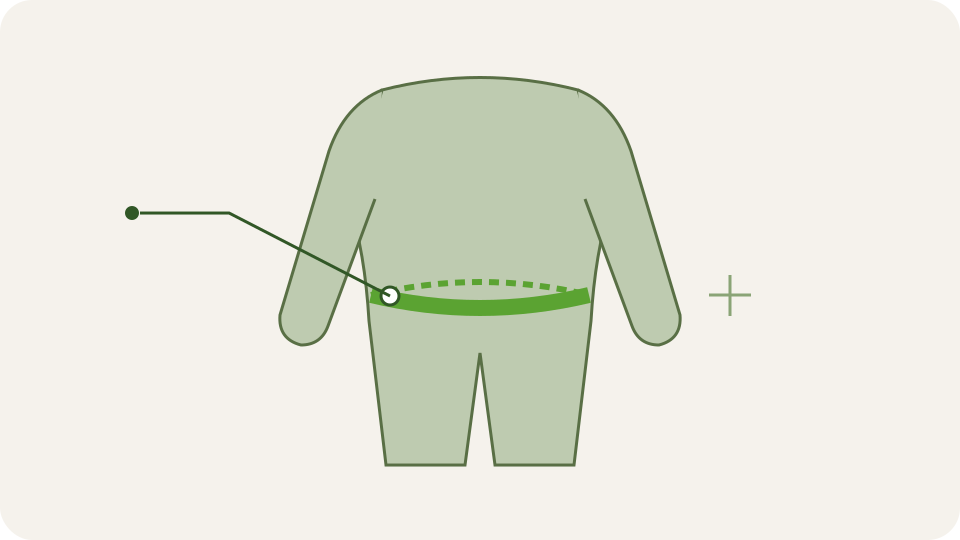
NHANES measures waist circumference at the uppermost lateral border of the hip bone, rather than automatically at the navel or narrowest part of the torso. Use a flexible, nonstretch tape against bare skin and keep it horizontal around the body.
Stand upright with your abdomen relaxed. Take the reading at the end of a normal exhalation without holding your breath or pulling your stomach in. The tape should touch the skin without compressing it. Record the location alongside the number so your next check uses the same method.
- Find the upper border of the hip bone on your right side.
- Wrap the tape horizontally at that level; a mirror or helper can check the back.
- Relax, breathe out normally and read the tape without tightening it.
- Repeat at the same site. If the readings differ, check tape angle and tension before recording a value.
Put your measurements in context
Explore height, weight and entered measurements in an illustrative 3D body model.
Average waist size by height: avoid a made-up target
This CDC table does not provide a waist recommendation for every height. A 175 cm person and a 190 cm person can share a 90 cm waist while having different proportions. Height adds context; it does not turn a population mean into an individual prescription.
For a transparent comparison, divide waist by height using the same unit: 90 ÷ 180 = 0.50. Our waist-to-height ratio calculator explains its screening context and limitations. The body visualizer illustrates proportions from inputs; it does not measure internal fat or diagnose health.
Why a 34-inch trouser label is not a 34-inch waist measurement
A clothing label depends on the brand, cut, stretch and where the waistband sits. Your anatomical waist measurement may be taken higher than your trousers. Do not substitute a jeans size for a tape measurement in a calculator or compare a clothing label with the CDC table.
If your goal is garment fit, use that brand’s size chart and its specified measurement site. If your goal is tracking your body, keep a separate anatomical measurement log. Both numbers can be useful without being interchangeable.
Use waist changes alongside progress photos
Choose a repeatable check-in, such as the same morning each week before breakfast, and note the tape site, posture and recent training. A single reading can move with meal timing, breathing and tape tension. Look for a sustained pattern across several check-ins rather than reacting to one result.
For example, a recorded change from 92 to 90 cm is a 2 cm reduction at that measurement site. It is not proof that you lost a particular number of kilograms of fat. Pair it with consistent progress photos, weight trends and how your training feels.
The body measurement guide helps keep waist, hip and limb checks consistent. You do not need to reach the national average for your own progress to be meaningful.
Limits and safety
Population averages describe a sample; they are not ideal sizes, diagnoses or personal targets. This article is educational fitness information, not medical advice.
FAQ
What is the average waist size for a man?
US men age 20 and older averaged 103.0 cm (40.6 inches) in NHANES 2021–2023. This is measured waist circumference at the hip-crest level, not a pants label or an ideal size.
Is a 32-inch or 34-inch waist normal?
Both can occur in adults, but a number alone cannot establish health or an ideal size. Confirm whether it is a clothing label or a tape measurement, then consider height, measurement method and your own trend.
Should I measure at my belly button?
Only if that is the protocol you have chosen for your own log. To compare with this NHANES table, measure at the upper border of the hip bone; that may differ from navel height.
Can a photo tell me my waist circumference?
An ordinary photo does not provide a verified tape measurement. Perspective, camera distance and scale affect appearance. Enter a real tape measurement when a calculator asks for waist circumference.