Three signals, one pattern
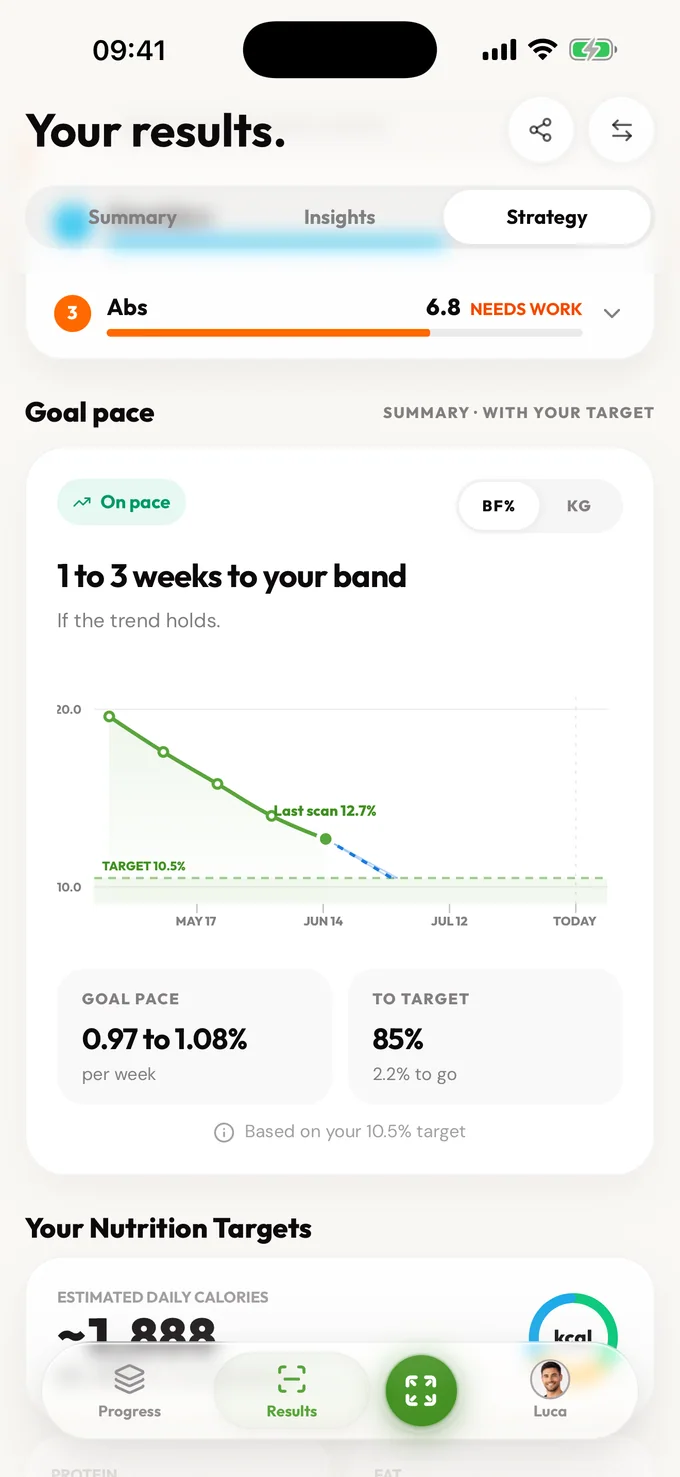
Estimated body-fat range
See Whether the Pattern Fits
Understand whether the commonly described pattern fits your visible body-fat range and muscle development, then get a practical next step without turning it into an identity.
Free scanPrivate by designResults in seconds.
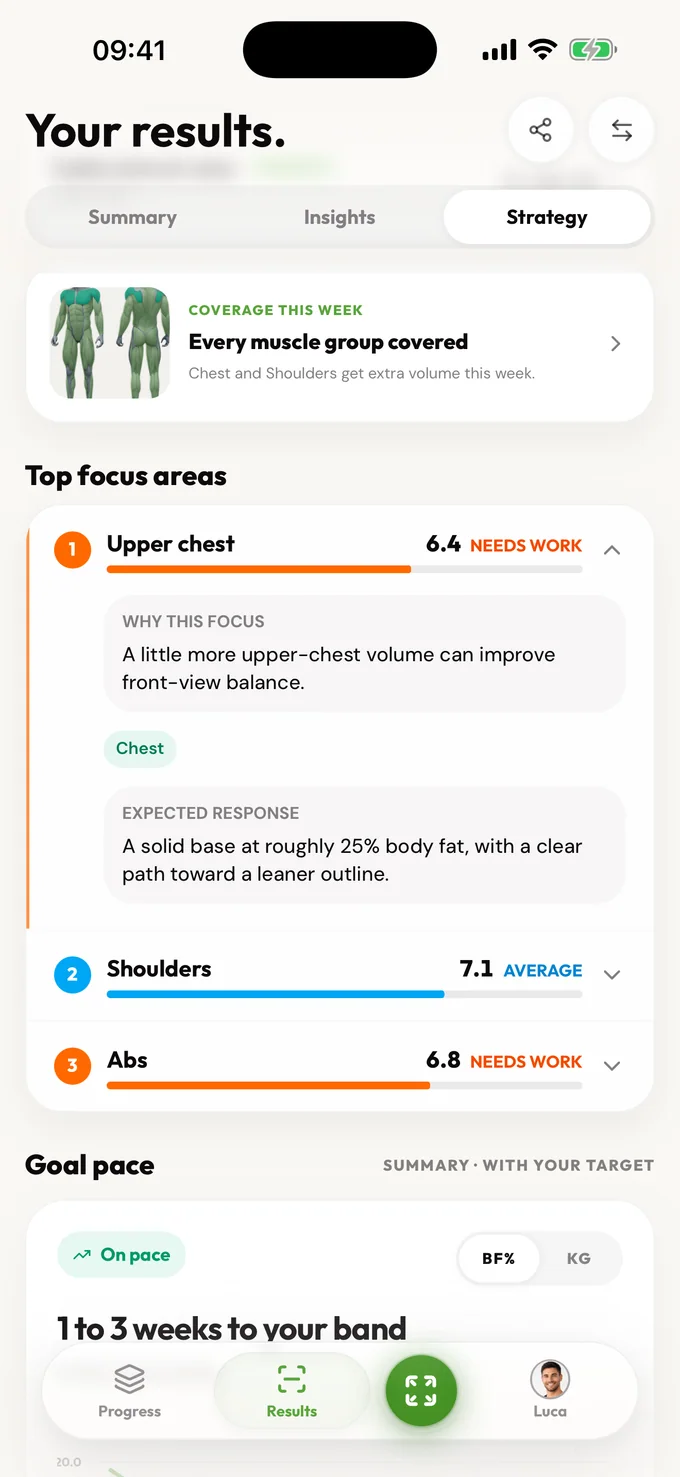
Understand whether the commonly described pattern fits your visible body-fat range and muscle development, then get a practical next step without turning it into an identity.
Analyze my photos
Understand whether the commonly described pattern fits your visible body-fat range and muscle development, then get a practical next step without turning it into an identity.
Estimated body-fat range
Visible muscle development by group
Midsection softness and distribution context
Plain-language pattern fit with photo confidence
A linked starting-phase recommendation
“Skinny fat” commonly describes a normal or lower body weight with limited visible muscle and enough body fat to soften definition. LeanLens checks the component signals—body-fat range, muscle development, distribution, and confidence—then explains whether the pattern fits. It is changeable context, not a diagnosis or permanent body type.
Estimated body-fat range
Visible muscle development by group
Midsection softness and distribution context
Understand whether the commonly described pattern fits your visible body-fat range and muscle development, then get a practical next step without turning it into an identity.
The pattern usually combines normal or low scale weight, limited visible muscle, and softness where definition would otherwise show. Each signal matters more than the label itself.
The label alone cannot decide. An aggressive cut or bulk may work against a person’s actual goal, while recomp can be a practical starting option for some newer lifters. Check training history, body-fat context, goals and trend before choosing a phase.
Build a repeatable resistance-training routine, eat enough protein for your circumstances, and compare several check-ins under similar conditions. The training frequency and diet should fit your health, experience and goal; a photo cannot prescribe them.
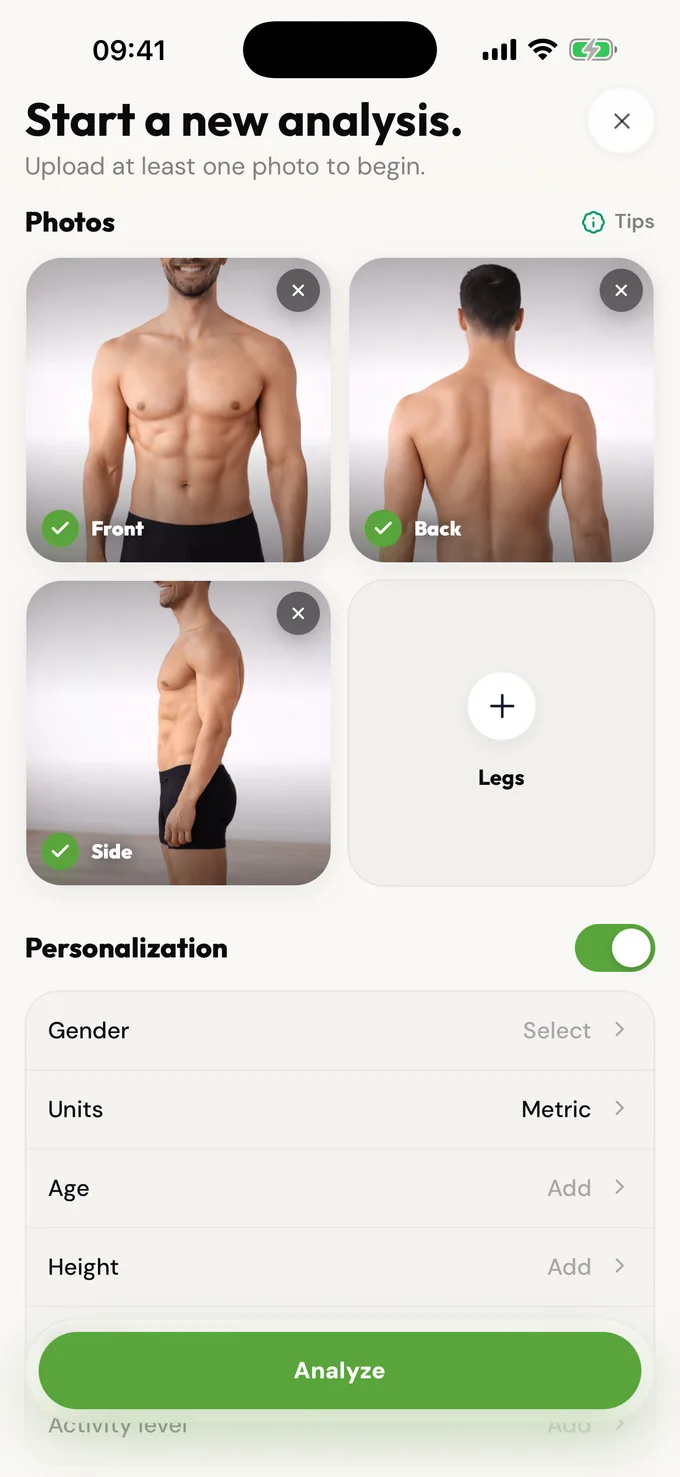
Compare
“Skinny fat” is informal language. The useful question is which evidence you have and what remains uncertain.
| Signal | Check | Limit |
|---|---|---|
| Appearance | Compare visible definition and development under repeatable photo conditions. | A photo does not establish health, strength or a fixed body type. |
| Composition context | Read the body-fat range beside entered weight and waist trends. | An estimated range is not a measured amount of fat or muscle. |
| Training decision | Use training history and your goal to choose a starting phase. | The separate cut-or-bulk decision owner handles that choice; the label alone cannot. |
Privacy and honesty aren't features we bolted on; they shape how the product works.
One purpose: creating your results. Your photos are shared only with the providers needed to create or store them. Guest scans auto-delete; sign in and you can delete your saved photos and results anytime.
Ranges over false precision. No body-shaming mechanics, ever. Results describe, they don't judge. And nothing about your body is used to pressure you.
Free includes an estimated body-fat range, confidence, summary, visible scores, photo-quality guidance, core detail for every available Muscle Balance result, and a limited focus view. Pro unlocks muscle history, bilateral and training-plan detail, deeper trends, strategy, and comparisons.
Free accounts can scan again after a short wait. Pro removes the wait and unlocks full results, trends, and comparisons.
No. BMI uses height and weight, while the informal skinny-fat description concerns visible muscle development and fat distribution. A normal BMI does not reveal either directly. Use the photo interpretation for context and the cut-or-bulk preview for the separate decision about a starting training phase.
No. It is informal fitness language for a visible pattern, not a diagnosis or a fixed body type.
AI can describe whether visible body-fat and muscle-development signals resemble the commonly described pattern, with uncertainty.
Not automatically. Your body-fat range, muscle base, experience, goal, and recent trend should determine the starting phase.
No. Recomp is often practical for newer lifters in the middle range, but a cut or lean bulk may fit different contexts.
Six to eight weeks of consistent training and repeatable photos usually gives a more useful signal than one week.
Coming soon to Android
Android is next. Join the waitlist and we'll email you the moment it's ready on Google Play.
Understand whether the commonly described pattern fits your visible body-fat range and muscle development, then get a practical next step without turning it into an identity.
No account required