
Track more than arm circumference
Use repeatable photos alongside your tape measurements to understand visible progress.
Searches for average bicep size often lead to tables that mix flexed gym measurements with relaxed population data. That comparison sounds precise but measures different things. The CDC’s August 2021–August 2023 data describe circumference around the relaxed mid-upper arm.
For US adults age 20 and older, the published mean is 34.7 cm (13.7 inches) for men and 32.9 cm (13.0 inches) for women. The tape surrounds muscle, fat, bone and skin; it does not isolate the biceps muscle or quantify muscle mass.
Relaxed mid-upper arm: US NHANES 2021–2023, table 16
| Age | Men: cm / inches | Women: cm / inches |
|---|---|---|
| 20 and older | 34.7 / 13.7 | 32.9 / 13.0 |
| 20–29 | 34.3 / 13.5 | 31.9 / 12.6 |
| 30–39 | 35.4 / 13.9 | 33.9 / 13.3 |
| 40–49 | 36.0 / 14.2 | 33.6 / 13.2 |
| 50–59 | 35.2 / 13.9 | 33.8 / 13.3 |
| 60–69 | 34.0 / 13.4 | 32.8 / 12.9 |
| 70–79 | 33.4 / 13.1 | 32.1 / 12.6 |
| 80 and older | 31.7 / 12.5 | 29.8 / 11.7 |
Why these are not flexed biceps averages
The CDC sample includes 2,652 men and 3,198 women with an arm measurement. The weighted figures describe the US adult population, not trained lifters. Pregnant women are excluded from the reference tables. Inches are converted from the published centimeters and rounded to one decimal.
A gym-style measurement at the largest point of a flexed arm changes both posture and potentially tape location. A post-workout measurement adds another changing condition. There is no defensible universal conversion that turns the relaxed mean into an average flexed biceps size.
How to measure relaxed upper-arm circumference
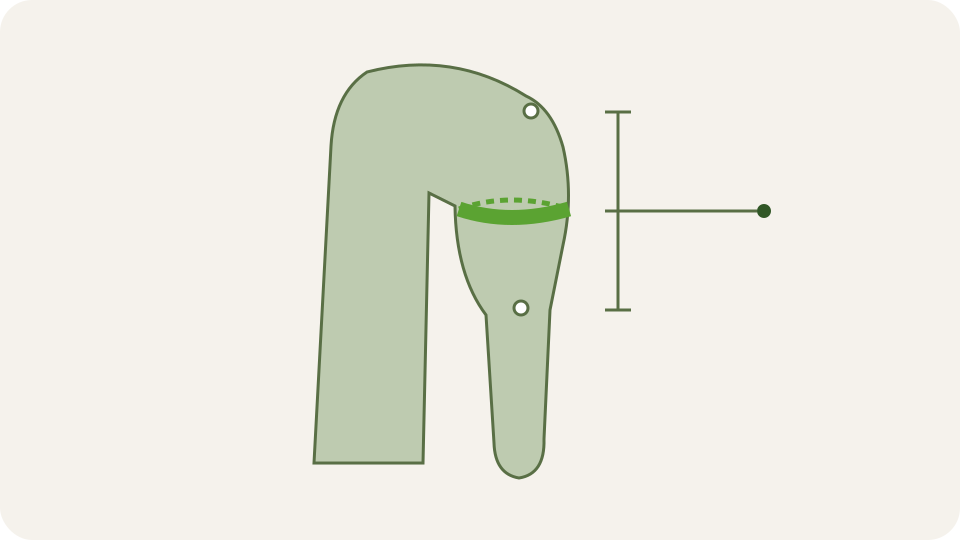
Find the midpoint between the shoulder’s acromion landmark and the tip of the elbow, following the CDC method. Mark that position before relaxing the arm. Wrap a nonstretch tape around the marked level with the arm hanging loosely; keep the tape snug without pressing into the skin.
Use the same arm and location on subsequent check-ins. A partner can make it easier to keep your shoulder relaxed while reading the tape. Write “relaxed, midpoint” beside the measurement so it cannot be confused with a flexed reading later.
- Mark the shoulder-to-elbow midpoint.
- Let the arm hang relaxed.
- Place the tape perpendicular to the upper arm at the mark.
- Repeat the reading with consistent tape tension.
Track more than arm circumference
Use repeatable photos alongside your tape measurements to understand visible progress.
How to keep a separate flexed-arm log
If flexed biceps size matters to your training log, use a separate series. Choose the same arm, elbow position and tape location each time; flex consistently and measure before training rather than comparing a pumped reading with a rested one.
Do not merge that log with the relaxed table above. For example, 35 cm relaxed and 37 cm flexed on the same day are two measurement conditions, not 2 cm of new muscle. The distinction matters more than adding another decimal place.
Are 14-, 15- or 16-inch arms big?
These sizes convert to 35.6, 38.1 and 40.6 cm, respectively. Whether they are above a particular reference depends on sex, age and measurement protocol. A 16-inch flexed arm cannot be compared directly with a relaxed CDC percentile.
Appearance also depends on limb length and the rest of the body. The same circumference on a taller frame can look different. A larger circumference is not automatically more muscular because a tape cannot separate muscle from fat. Use proportions and training progress without turning a single number into a body ranking.
Track arm progress without overinterpreting the tape
Keep arm measurements, consistent photos and training performance together. Use the same light, pose and camera distance in your progress photos. A change repeated across several check-ins is more informative than a single reading after a hard workout.
For example, moving from 34.0 to 34.5 cm over several checks is a 0.5 cm circumference change, not a measured amount of biceps growth. Review the same-period weight, waist and strength trends before interpreting it.
LeanLens’s muscle balance analysis adds visual context to your photos; it does not replace tape measurements or determine muscle mass from arm circumference. The body measurement guide explains how to keep a consistent record.
Limits and safety
Population averages describe a sample; they are not ideal sizes, diagnoses or personal targets. This article is educational fitness information, not medical advice.
FAQ
What is the average bicep size for men?
The CDC reports average relaxed mid-upper-arm circumference of 34.7 cm (13.7 inches) for US men age 20 and older in NHANES 2021–2023. This is not an average flexed biceps measurement.
What is the average arm size for women?
The corresponding relaxed upper-arm mean is 32.9 cm (13.0 inches) for US women age 20 and older, excluding pregnant women. It measures the whole upper-arm circumference, not just muscle.
Should I measure my biceps flexed or relaxed?
Use relaxed midpoint measurements to compare with the CDC table. For a flexed training log, record a separate series with consistent posture, location and timing.
Can arm circumference tell me how much muscle I gained?
No. Circumference includes muscle, fat and other tissues and is affected by measurement conditions. Combine repeat measurements with photos and training performance instead of converting centimeters into muscle mass.