Body composition is more than body fat
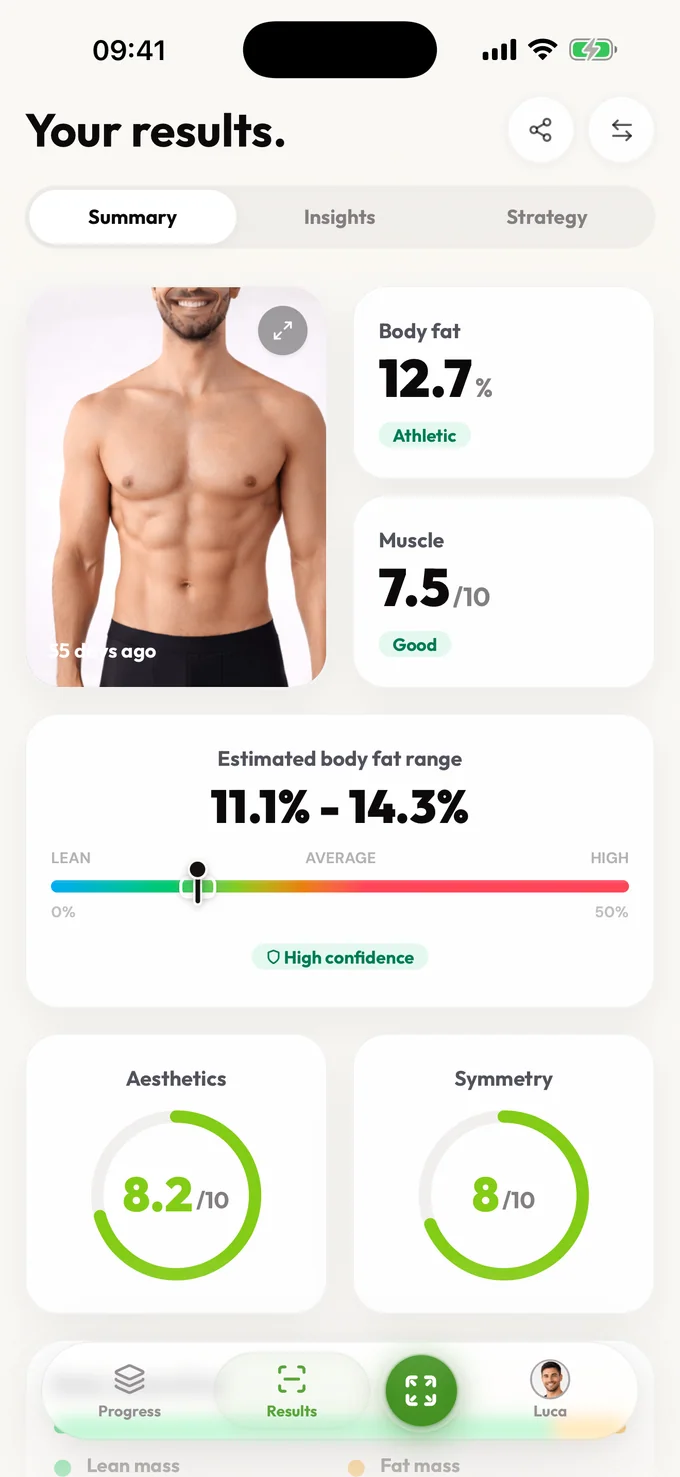
Body fat range and confidence context for directional leanness
Fat, Muscle, and Balance From Photos
Use visible body fat, muscle balance, proportion, and progress signals as fitness context, not as a clinical scan.
Free scanPrivate by designResults in seconds.
Use visible signals as fitness context, not a clinical scan.
Coming soon to Android
Android is next. Join the waitlist and we'll email you the moment it's ready on Google Play.
Use visible body fat, muscle balance, proportion, and progress signals as fitness context, not as a clinical scan.
Run a composition check-inUse visible body fat, muscle balance, proportion, and progress signals as fitness context, not as a clinical scan.
Body fat range and confidence context for directional leanness
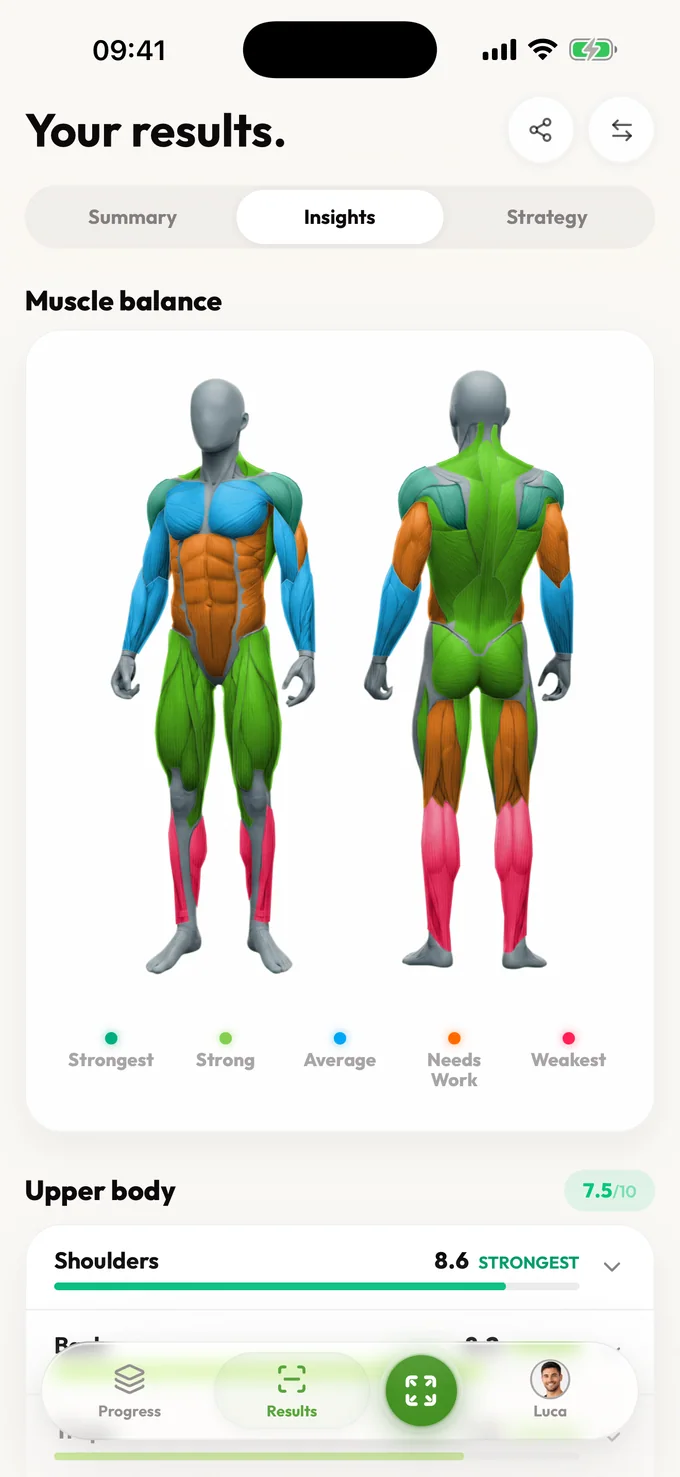
Muscle balance and visible development across body regions
Symmetry and proportion cues that can guide training priorities
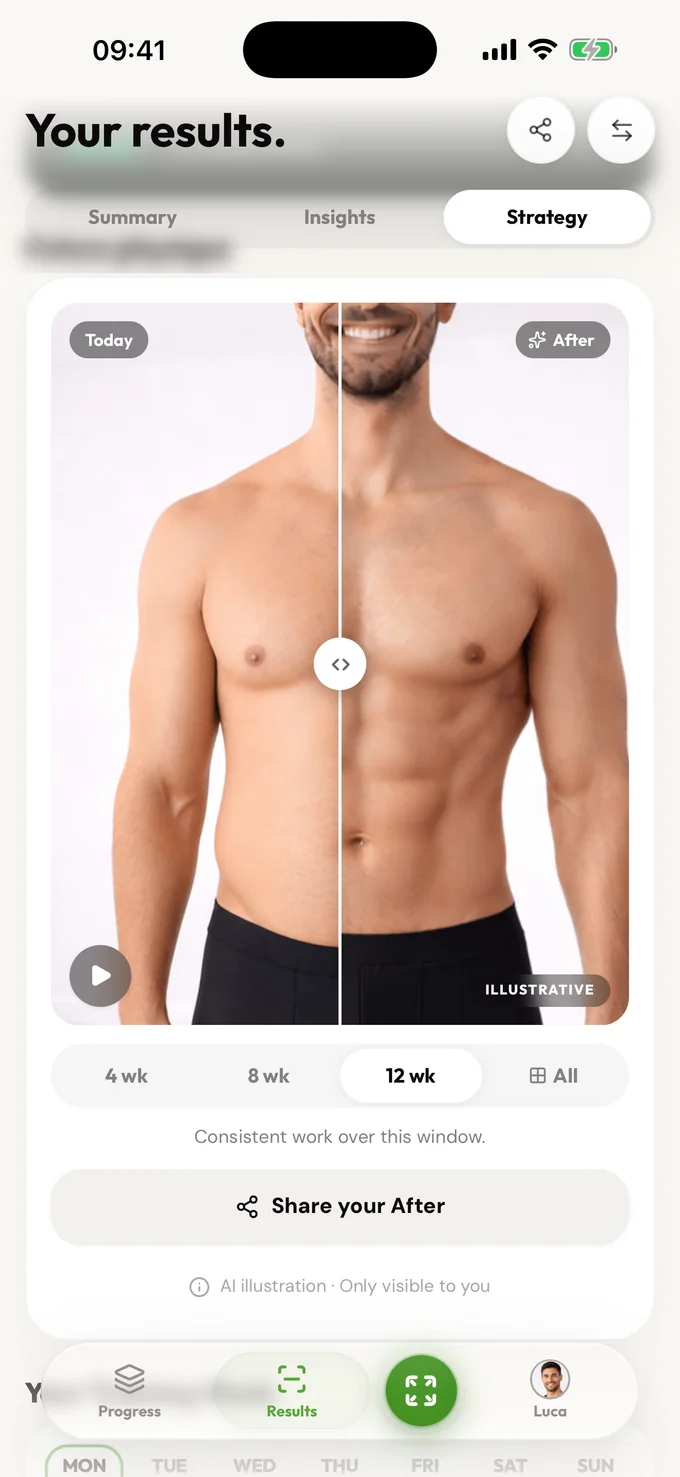
Progress direction across repeatable photo check-ins
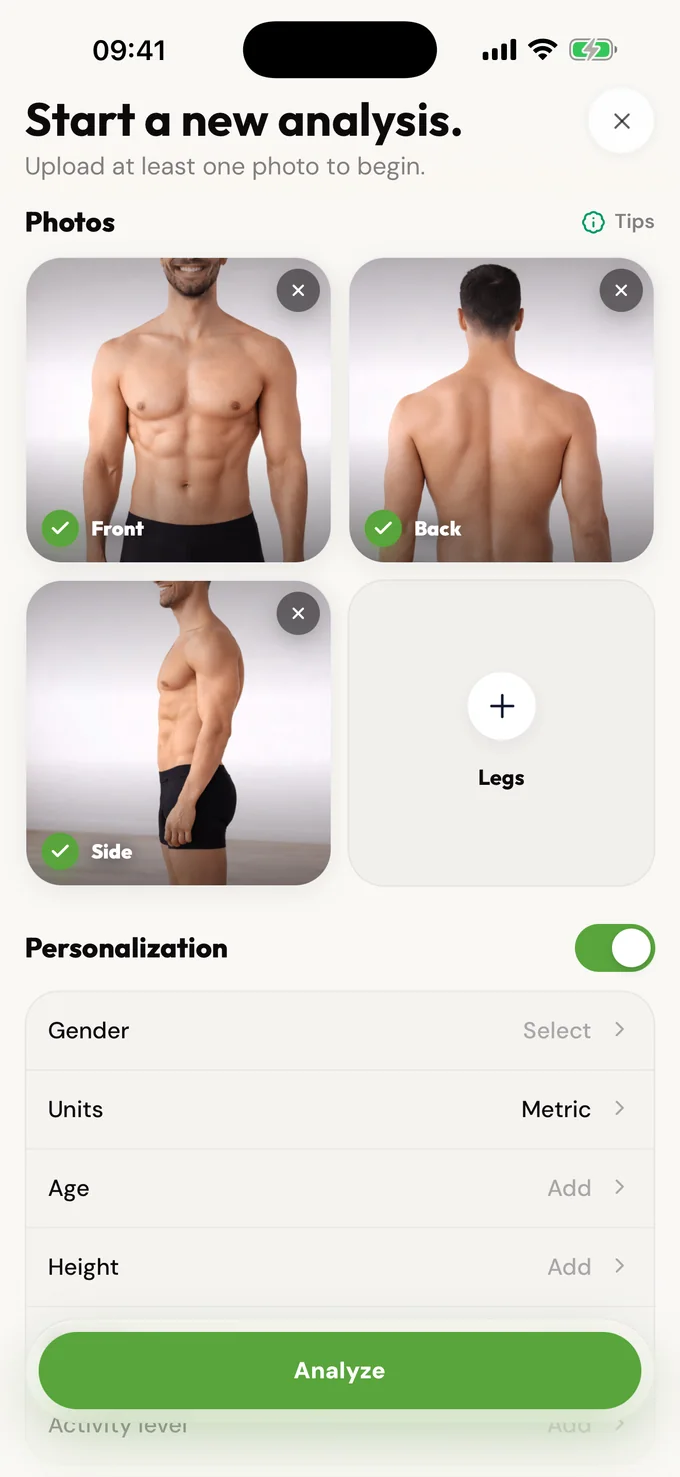
Body composition from a photo can show useful visual signals such as a confidence-aware body fat range, muscle balance, proportions, and progress direction. It cannot measure tissue compartments directly, so use the result for repeatable fitness check-ins rather than medical decisions.
Body fat range and confidence context for directional leanness
Muscle balance and visible development across body regions
Symmetry and proportion cues that can guide training priorities
Use visible body fat, muscle balance, proportion, and progress signals as fitness context, not as a clinical scan.
Two people at a similar weight or body fat range can look different because fat distribution, muscle development, posture, and proportions all shape the visible result. Read these signals together before choosing a priority.
Keep the main plan stable, add a measured amount of work for one focus area, and compare again after several consistent weeks. LeanLens is meant to simplify the next decision, not restart your whole program.
Lighting, pose, camera height, clothing, hydration, and timing all change the visual read. Use similar conditions and treat the result as directional fitness guidance rather than clinical body-composition data.
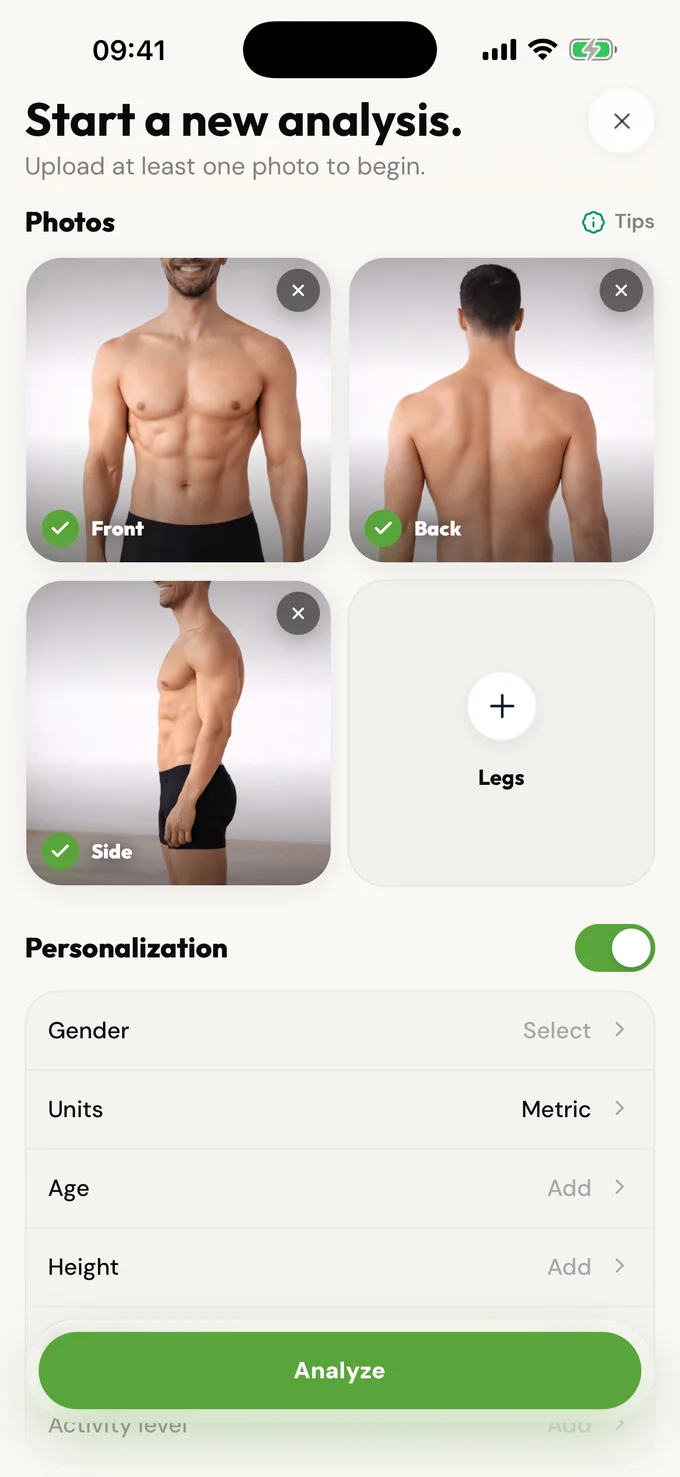
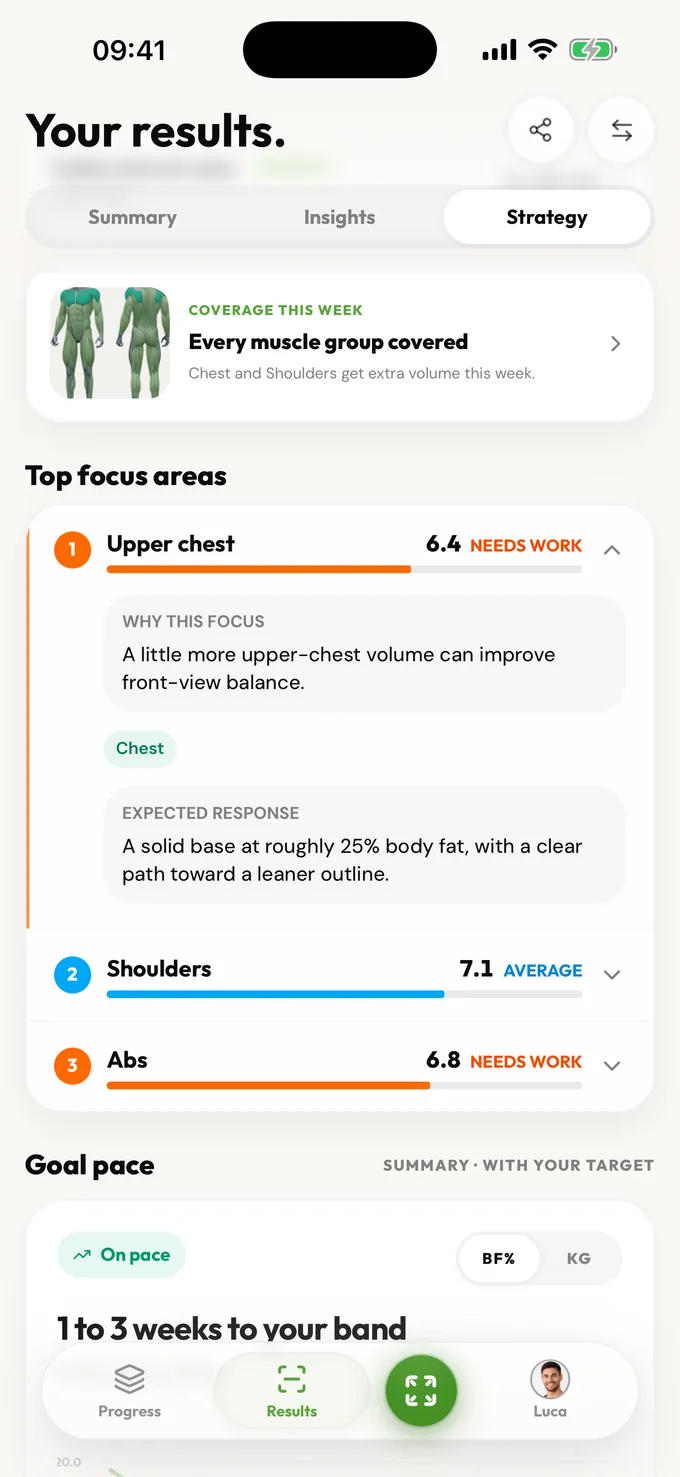
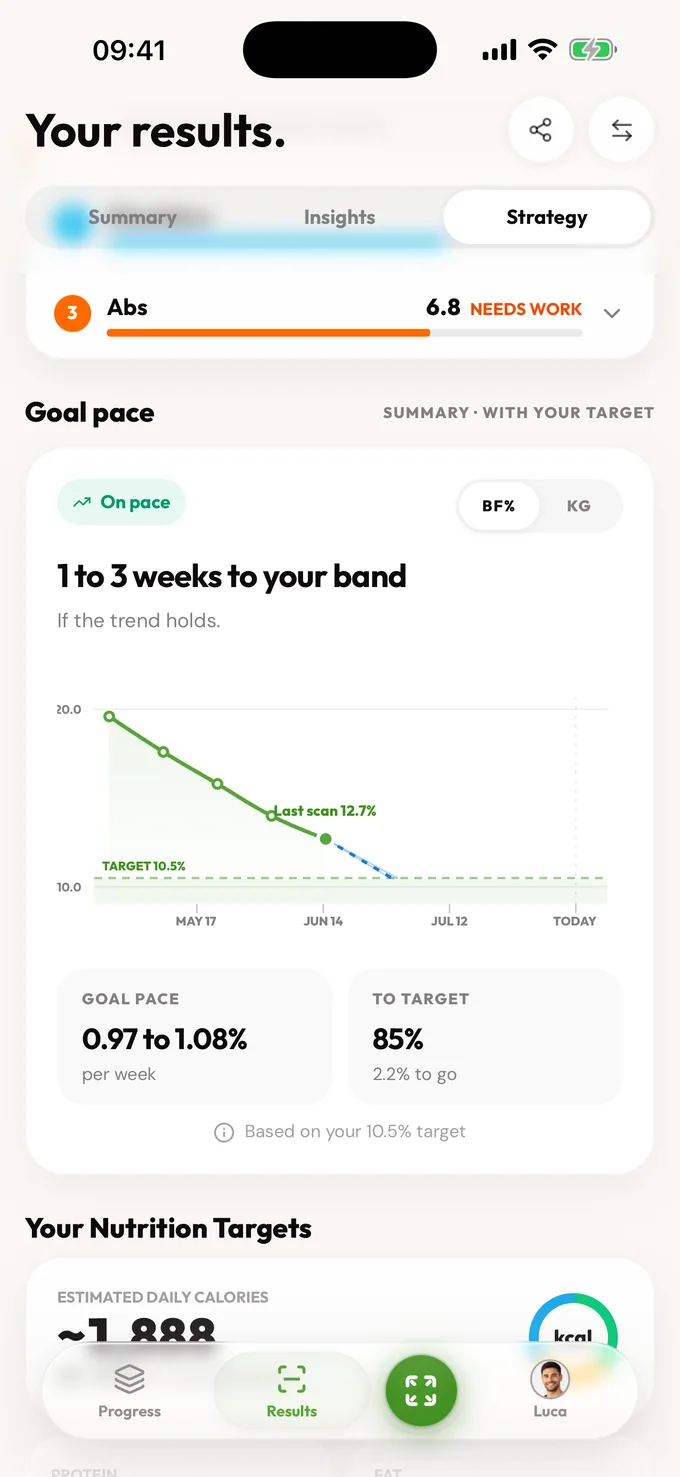
Body composition is the relationship between fat, muscle, and proportions, not one body fat number. LeanLens reads visible signals from consistent photos and combines a confidence-aware body fat range with muscle balance, symmetry, strengths, and focus areas. The result is useful fitness context for deciding what to train or monitor next. It is not a tissue measurement, diagnosis, or substitute for DEXA or another clinical method. For photo body composition analysis, treat entered scale weight as an input and calculated lean mass as an estimate; neither turns visible muscle balance into a direct muscle-mass measurement.
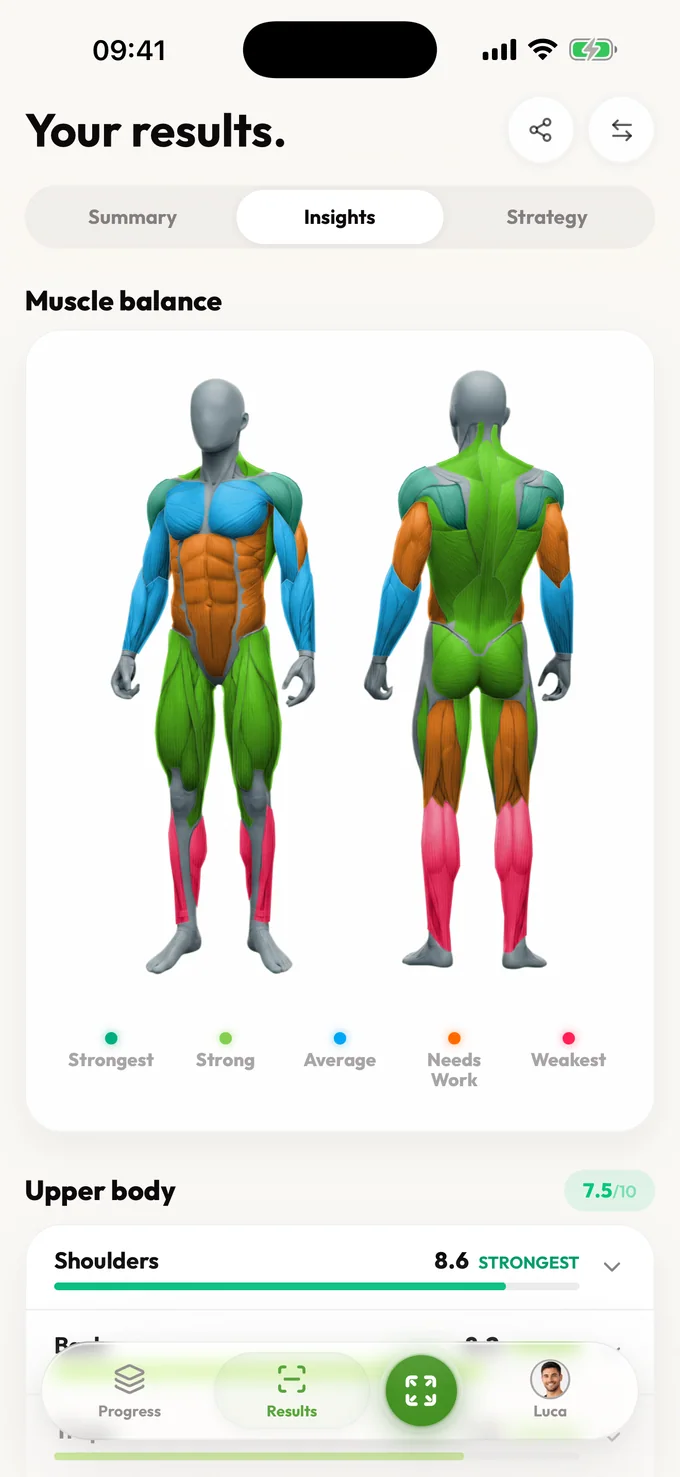
Use visible body fat, muscle balance, proportion, and progress signals as fitness context, not as a clinical scan.
Body fat range and confidence context for directional leanness
Muscle balance and visible development across body regions
Symmetry and proportion cues that can guide training priorities
Progress direction across repeatable photo check-ins
Use visible body fat, muscle balance, proportion, and progress signals as fitness context, not as a clinical scan.
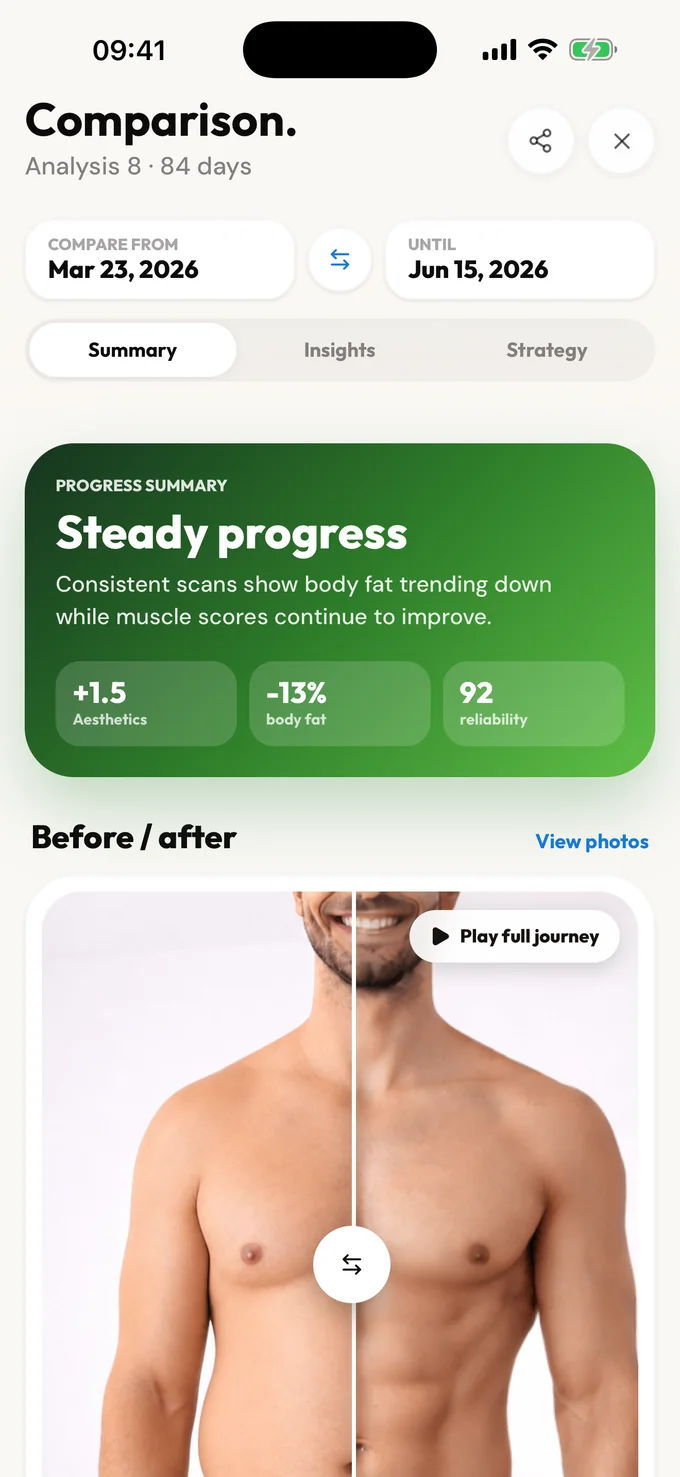
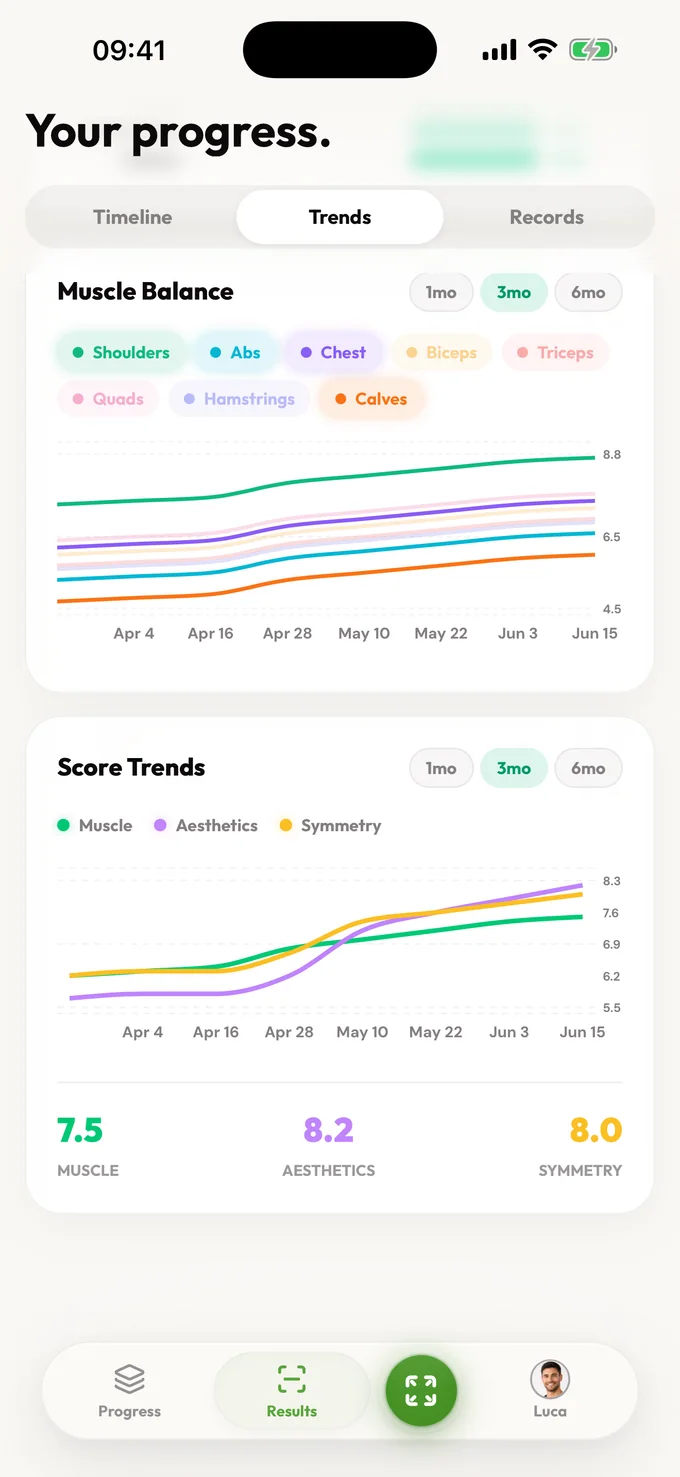
Compare
| Photo signal | Useful for | Cannot prove |
|---|---|---|
| Height and scale weight | Entered measurements when supplied | Not measured from a photograph |
| Lean mass and FFMI | Calculated from entered height, weight and estimated body fat | A direct measurement of muscle tissue |
| Visceral fat and bone density | Not available from the photo analysis | An internal fat measurement or bone-density assessment |
| Body fat range | Directional leanness and trend context | An exact clinical body fat percentage |
| Muscle balance | Areas that look stronger or less developed | Exact muscle mass in kilograms |
| Symmetry and proportion | Visible left-right and upper-lower patterns | Injury diagnosis or medical assessment |
| Progress photos | Direction across consistent check-ins | A final verdict from one photo |
Privacy and honesty aren't features we bolted on; they shape how the product works.
One purpose: creating your results. Your photos are shared only with the providers needed to create or store them. Guest scans auto-delete; sign in and you can delete your saved photos and results anytime.
Ranges over false precision. No body-shaming mechanics, ever. Results describe, they don't judge. And nothing about your body is used to pressure you.
Free includes an estimated body-fat range, confidence, summary, visible scores, photo-quality guidance, core detail for every available Muscle Balance result, and a limited focus view. Pro unlocks muscle history, bilateral and training-plan detail, deeper trends, strategy, and comparisons.
Free accounts can scan again after a short wait. Pro removes the wait and unlocks full results, trends, and comparisons.
The photo supplies visible shape, definition and proportion cues. Body-fat range and muscle-balance interpretation are estimates. Height and scale weight are entered measurements when you provide them; lean mass and FFMI are calculations that depend on those inputs and the body-fat estimate. Visceral fat, bone density and exact muscle mass are not measured by the photo.
A photo can show useful body-composition signals such as a body fat range, muscle balance, proportions, and progress direction. It cannot directly measure tissue compartments.
LeanLens adds muscle balance, symmetry, strengths, focus areas, and next-step context so the result is not reduced to one body fat number.
No. It is informational fitness guidance for check-ins. Use clinical methods and qualified professionals for medical decisions.
Coming soon to Android
Android is next. Join the waitlist and we'll email you the moment it's ready on Google Play.
Use visible body fat, muscle balance, proportion, and progress signals as fitness context, not as a clinical scan.
Scan free every week. Upgrade to Pro for full reports and no waiting.